

Free paper practice
NEET 2026 (3 May, cancelled paper) – PYQ Practice
NEET UG (National Eligibility cum Entrance Test) • 2026 • 180 Questions • Free practice
Q1Physics
The speed of light in vacuum is taken as unity. If light takes 6 min 40 s to reach the Earth from the Sun, the distance between the Sun and the Earth in new unit is:
A. 
B. 500
C. 
D. 400
View answer and available explanation
Correct Option: D
Answer D follows the ExamSIDE indexed key. See the credited source; not independently verified against an official final key.
Q2Physics
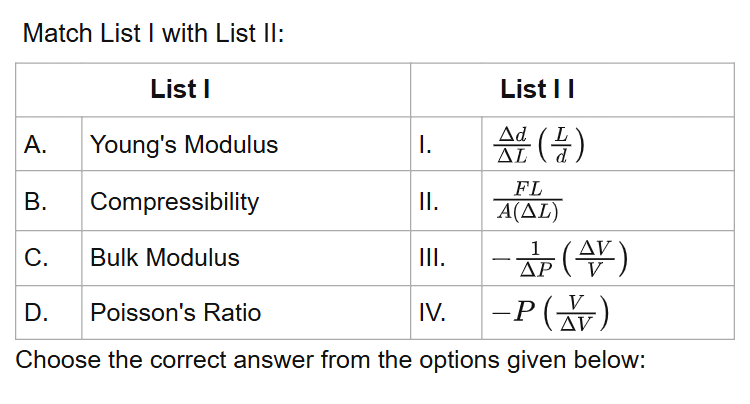
A. A-IV, B-I, C-II, D-III
B. A-III, B-II, C-I, D-IV
C. A-I, B-IV, C-III, D-II
D. A-II, B-III, C-IV, D-I
View answer and available explanation
Correct Option: D
Answer D follows the ExamSIDE indexed key. See the credited source; not independently verified against an official final key.
Q3Physics
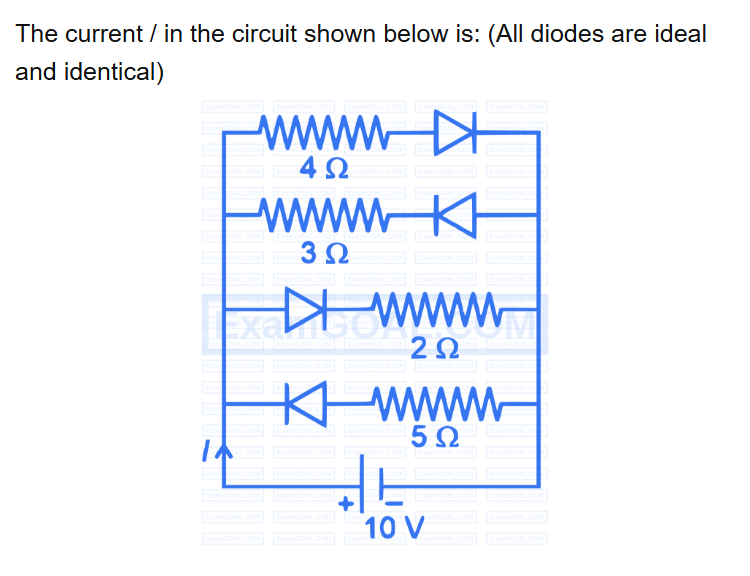
A. 
B. 
C. 
D. 
View answer and available explanation
Correct Option: D
Answer D follows the ExamSIDE indexed key. See the credited source; not independently verified against an official final key.
Q4Physics
The angular speed of a flywheel is increased from 600 rpm to 1200 rpm in 10 s . The number of revolutions completed by the flywheel during this time is:
A. 900
B. 600
C. 150
D. 300
View answer and available explanation
Correct Option: C
Answer C follows the ExamSIDE indexed key. See the credited source; not independently verified against an official final key.
Q5Physics

A. 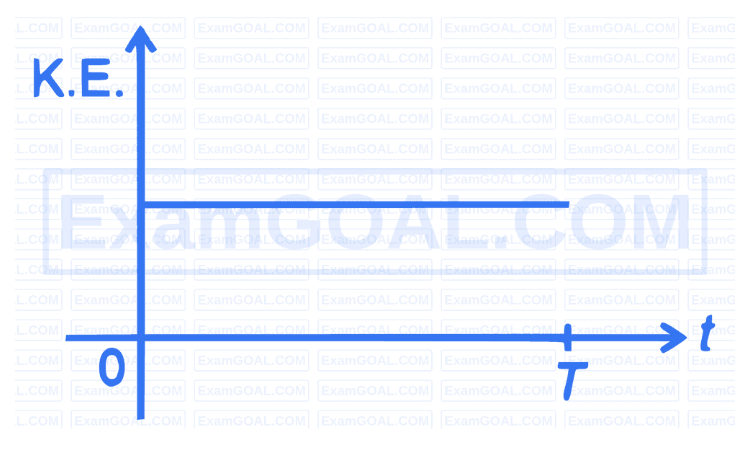
B. 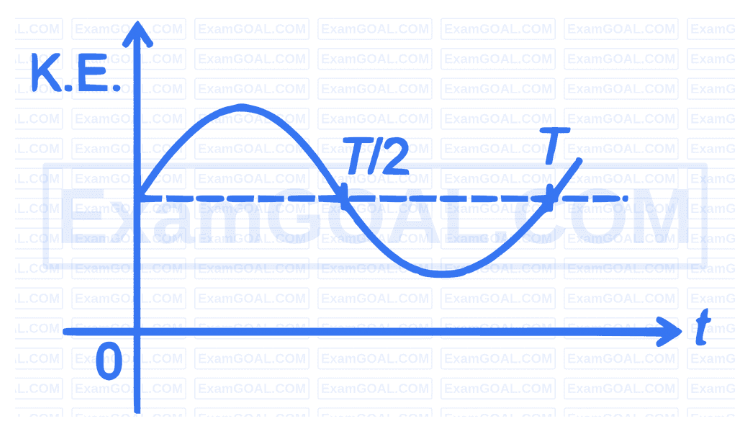
C. 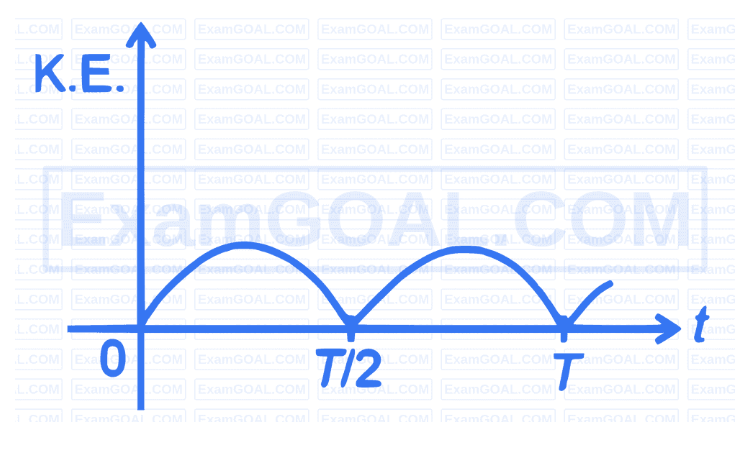
D. 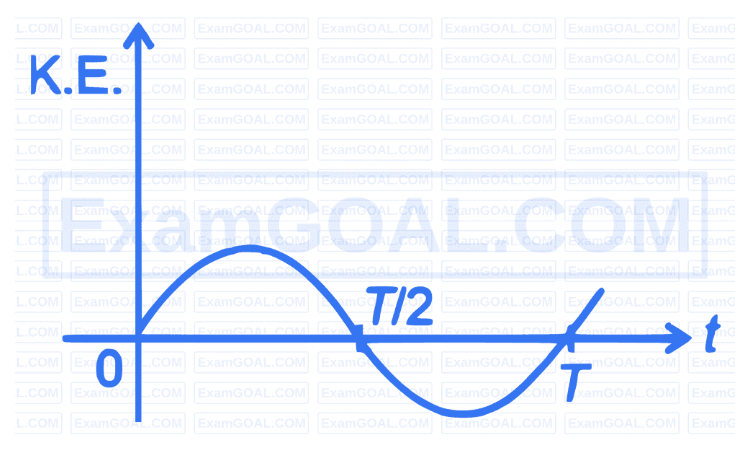
View answer and available explanation
Correct Option: C
Answer C follows the ExamSIDE indexed key. See the credited source; not independently verified against an official final key.
Q6Physics
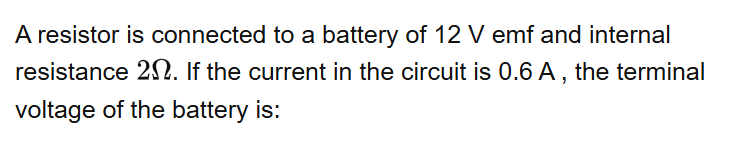
A. 10 V
B. 1.2 V
C. 12 V
D. 10.8 V
View answer and available explanation
Correct Option: D
Answer D follows the ExamSIDE indexed key. See the credited source; not independently verified against an official final key.
Q7Physics
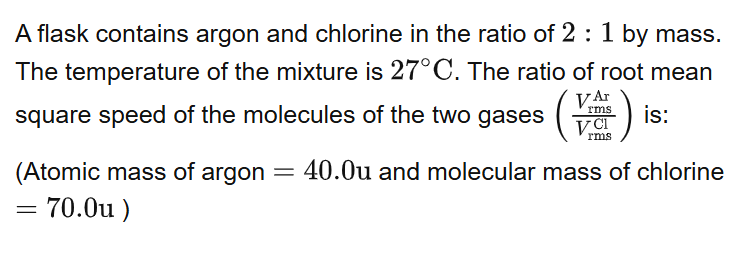
A. 
B. 
C. 
D. 
View answer and available explanation
Correct Option: A
Answer A follows the ExamSIDE indexed key. See the credited source; not independently verified against an official final key.
Q8Physics
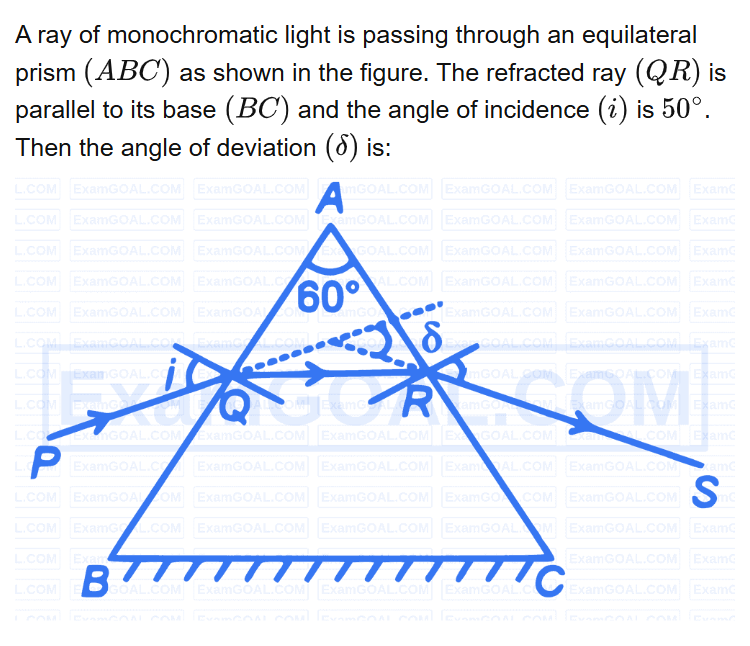
A. 
B. 
C. 
D. 
View answer and available explanation
Correct Option: C
Answer C follows the ExamSIDE indexed key. See the credited source; not independently verified against an official final key.
Q9Physics
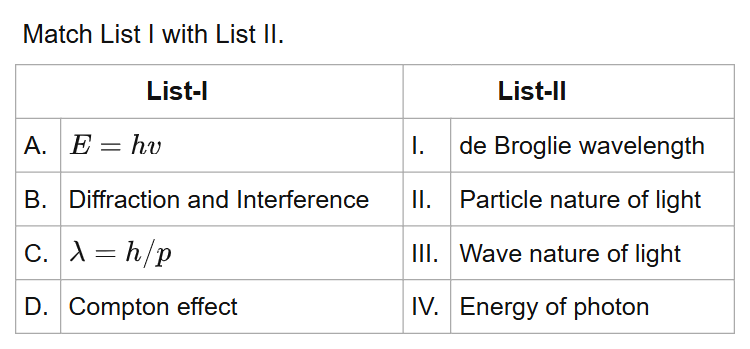
A. A-IV, B-I, C-II, D-III
B. A-IV, B-III, C-II, D-I
C. A-I, B-IV, C-III, D-II
D. A-IV, B-III, C-I, D-II
View answer and available explanation
Correct Option: D
Answer D follows the ExamSIDE indexed key. See the credited source; not independently verified against an official final key.
Q10Physics
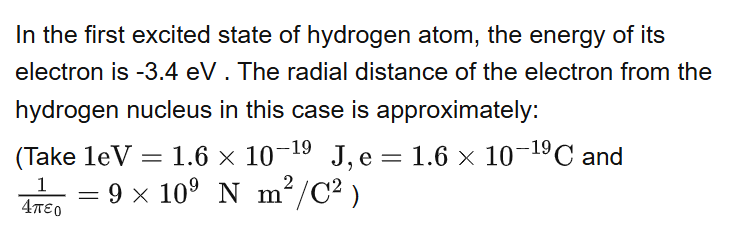
A. 
B. 
C. 
D. 
View answer and available explanation
Correct Option: C
Answer C follows the ExamSIDE indexed key. See the credited source; not independently verified against an official final key.
Q11Physics
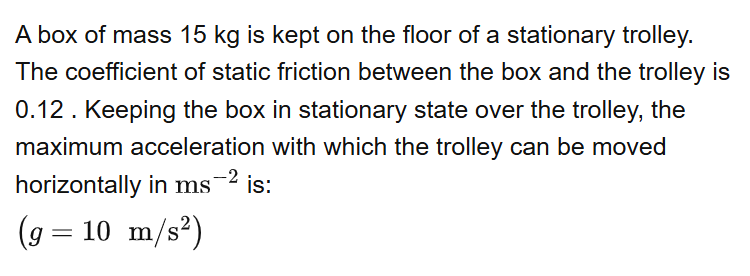
A. 2.1
B. 1.8
C. 1.5
D. 1.2
View answer and available explanation
Correct Option: D
Answer D follows the ExamSIDE indexed key. See the credited source; not independently verified against an official final key.
Q12Physics
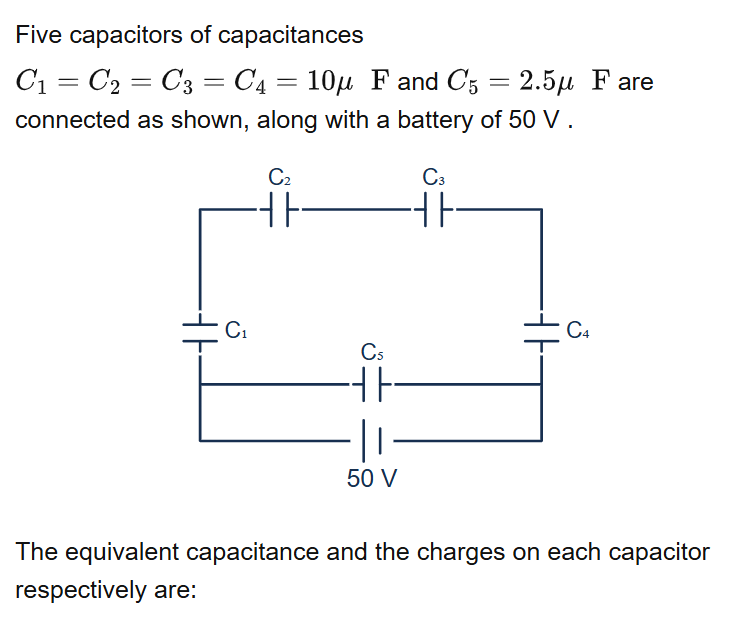
A. 
B. 
C. 
D. 
View answer and available explanation
Correct Option: B
Answer B follows the ExamSIDE indexed key. See the credited source; not independently verified against an official final key.
Q13Physics
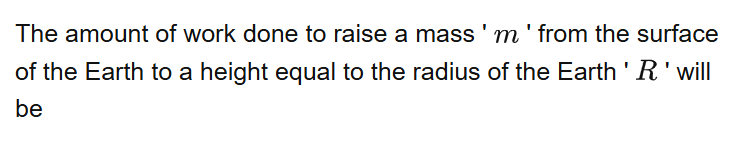
A. 
B. 
C. 
D. 
View answer and available explanation
Correct Option: D
Answer D follows the ExamSIDE indexed key. See the credited source; not independently verified against an official final key.
Q14Physics
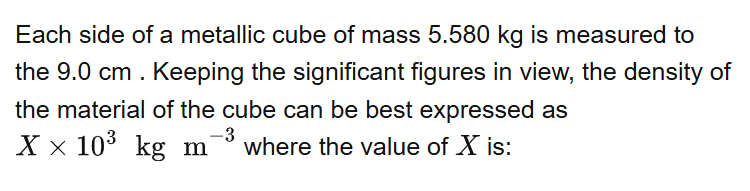
A. 7.654
B. 7.6
C. 7.65
D. 7.7
View answer and available explanation
Correct Option: D
Answer D follows the ExamSIDE indexed key. See the credited source; not independently verified against an official final key.
Q15Physics
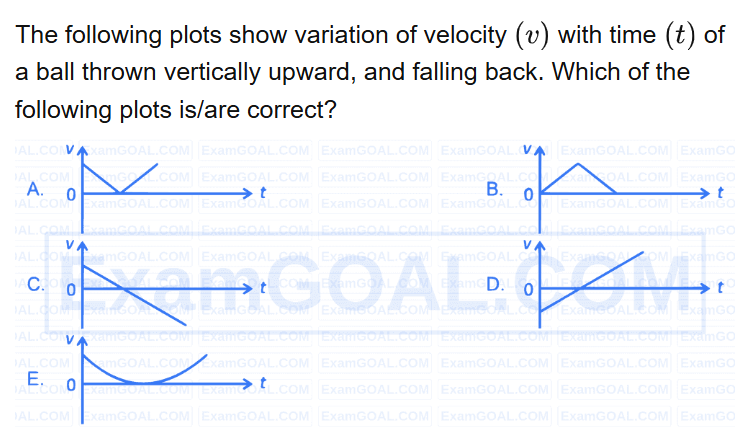
A. C only
B. D only
C. B only
D. A and E only
View answer and available explanation
Correct Option: A
Answer A follows the ExamSIDE indexed key. See the credited source; not independently verified against an official final key.
Q16Physics
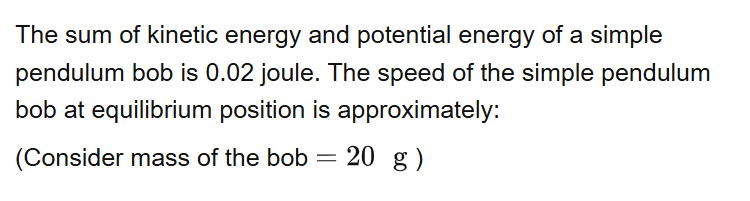
A. 
B. 
C. 
D. 
View answer and available explanation
Correct Option: B
Answer B follows the ExamSIDE indexed key. See the credited source; not independently verified against an official final key.
Q17Physics
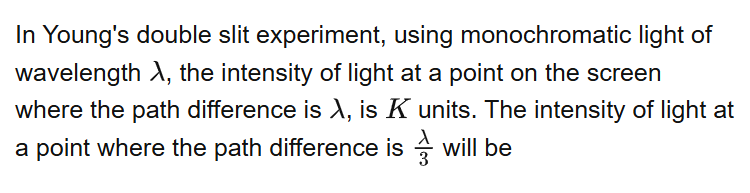
A. 
B. K
C. 
D. 
View answer and available explanation
Correct Option: A
Answer A follows the ExamSIDE indexed key. See the credited source; not independently verified against an official final key.
Q18Physics
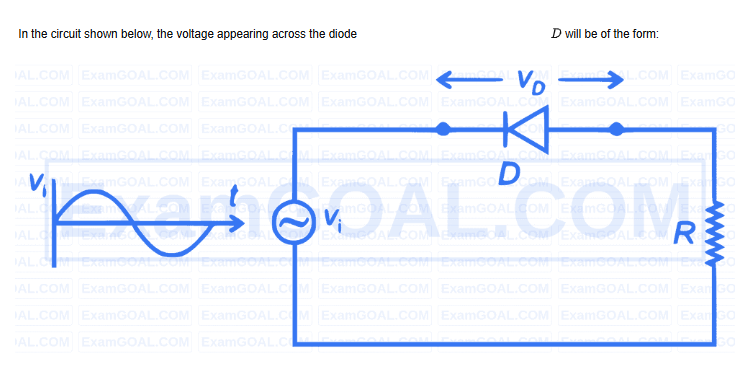
A. 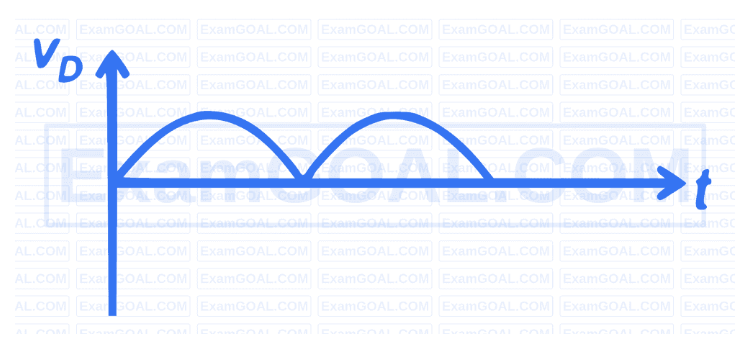
B. 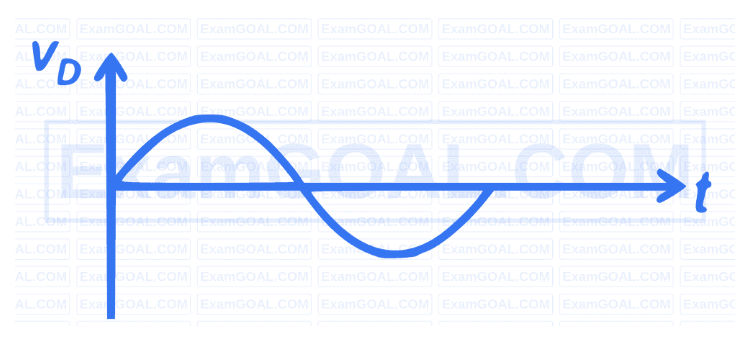
C. 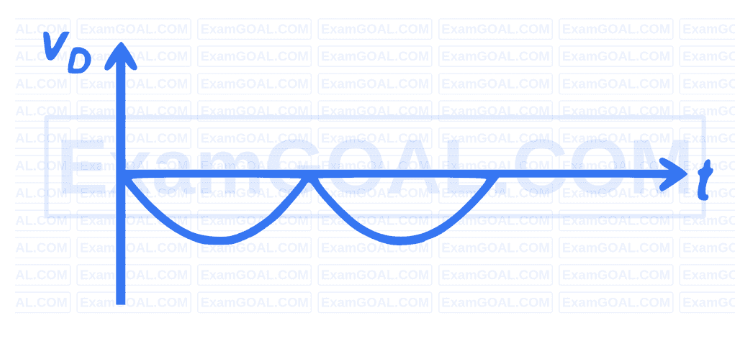
D. 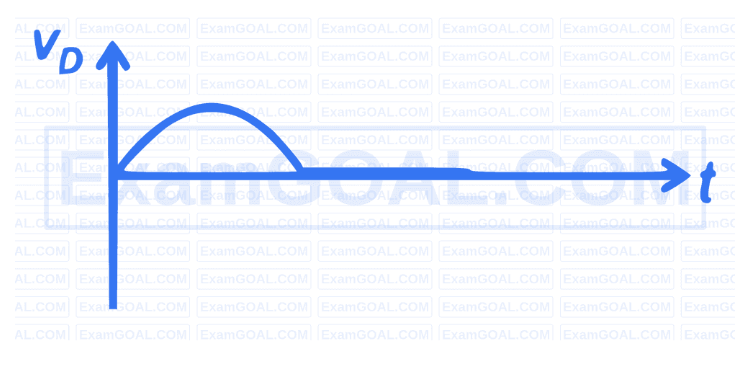
View answer and available explanation
Correct Option: D
Answer D follows the ExamSIDE indexed key. See the credited source; not independently verified against an official final key.
Q19Physics
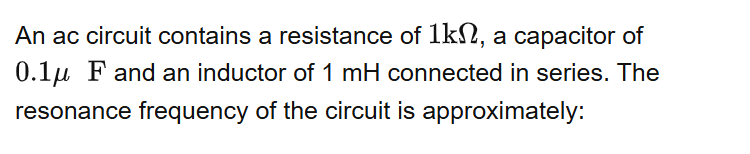
A. 13.5 kHz
B. 10.1 kHz
C. 20.7 kHz
D. 15.9 kHz
View answer and available explanation
Correct Option: D
Answer D follows the ExamSIDE indexed key. See the credited source; not independently verified against an official final key.
Q20Physics
In interference and diffraction, the light energy is redistributed. If it reduces in one region, producing a dark fringe, it increases in another region, producing a bright fringe.
A. As there is no gain or loss of energy, these phenomena are consistent with the principle of conservation of energy.
B. Diffraction and interference are characteristics exhibited only by light waves.
Choose the correct answer from the options given below:
A. 
B. 
C. 
D. Both A and B are false
View answer and available explanation
Correct Option: C
Answer C follows the ExamSIDE indexed key. See the credited source; not independently verified against an official final key.
Q21Physics
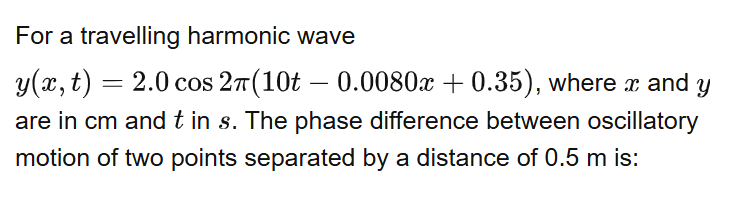
A. 
B. 
C. 
D. 
View answer and available explanation
Correct Option: B
Answer B follows the ExamSIDE indexed key. See the credited source; not independently verified against an official final key.
Q22Physics
The magnitude and direction of the acceleration produced in a body of mass 5 kg when two mutually perpendicular forces 8 N and 6 N act on it, are respectively:
A. 
B. 
C. 
D. 
View answer and available explanation
Correct Option: D
Answer D follows the ExamSIDE indexed key. See the credited source; not independently verified against an official final key.
Q23Physics
Consider two uncharged capacitors of equal capacitance 200 pF . One of them is charged by a 100 V supply and disconnected. Now this capacitor is connected to the uncharged capacitor. The amount of electrostatic energy lost in the process is:
A. 
B. 1.0 J
C. 
D. 0.5 J
View answer and available explanation
Correct Option: A
Answer A follows the ExamSIDE indexed key. See the credited source; not independently verified against an official final key.
Q24Physics

A. 19.6 W
B. 39.2 W
C. 19.6 kW
D. 39.2 kW
View answer and available explanation
Correct Option: C
Answer C follows the ExamSIDE indexed key. See the credited source; not independently verified against an official final key.
Q25Physics
In a vernier calliper, 20 VSD coincide with 16 MSD (each division of length 1 mm ). The least count of the vernier callipers is:
A. 0.2 cm
B. 0.01 cm
C. 0.02 cm
D. 0.1 cm
View answer and available explanation
Correct Option: C
Answer C follows the ExamSIDE indexed key. See the credited source; not independently verified against an official final key.
Q26Physics
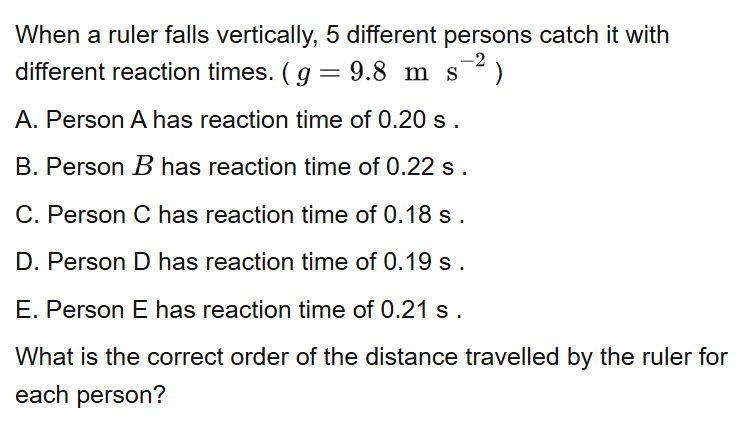
A. 
B. 
C. 
D. 
View answer and available explanation
Correct Option: C
Answer C follows the ExamSIDE indexed key. See the credited source; not independently verified against an official final key.
Q27Physics
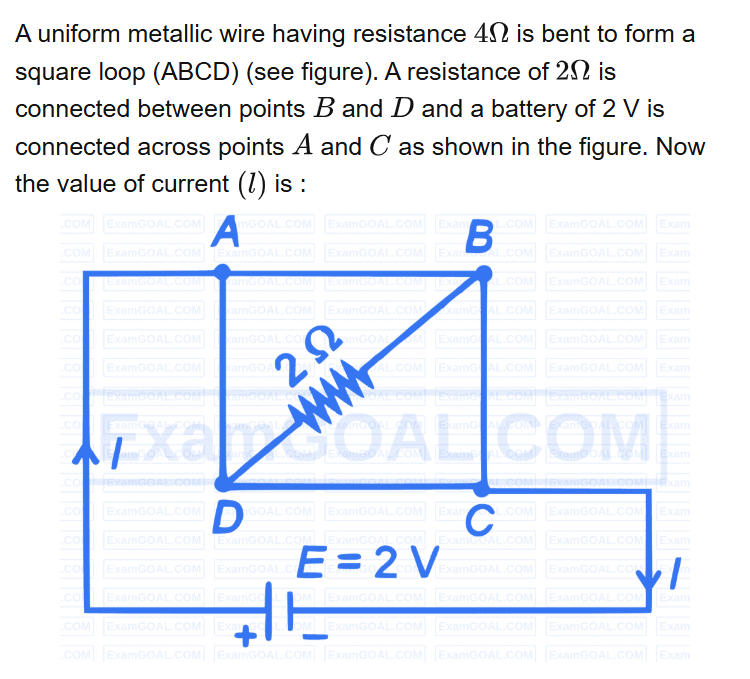
A. 2 A
B. 8 A
C. 4.5 A
D. 4 A
View answer and available explanation
Correct Option: A
Answer A follows the ExamSIDE indexed key. See the credited source; not independently verified against an official final key.
Q28Physics

A. 200 W
B. 400 W
C. 331 W
D. 121 W
View answer and available explanation
Correct Option: C
Answer C follows the ExamSIDE indexed key. See the credited source; not independently verified against an official final key.
Q29Physics
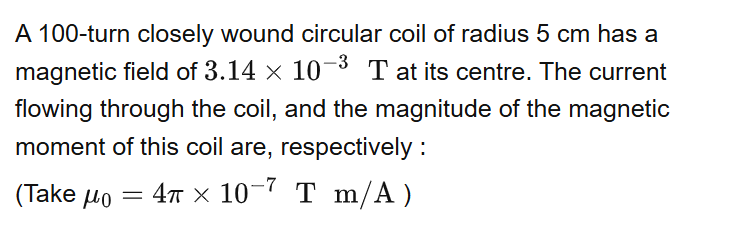
A. 
B. 
C. 
D. 
View answer and available explanation
Correct Option: D
Answer D follows the ExamSIDE indexed key. See the credited source; not independently verified against an official final key.
Q30Physics
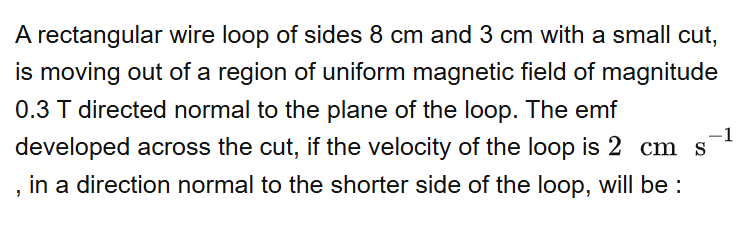
A. 
B. 
C. 
D. 
View answer and available explanation
Correct Option: D
Answer D follows the ExamSIDE indexed key. See the credited source; not independently verified against an official final key.
Q31Physics
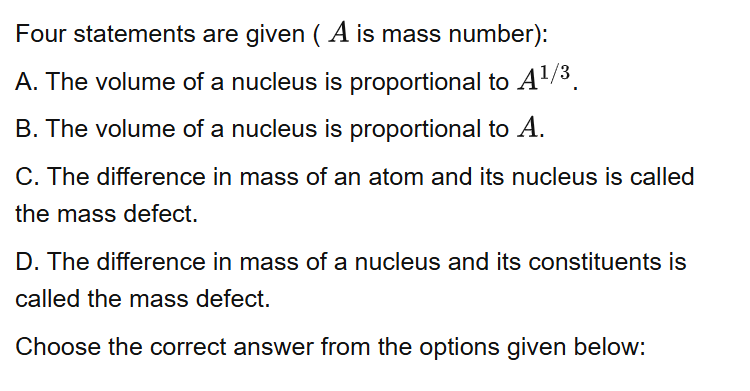
A. A and C are true, but B and D are false
B. B and C are true, but A and D are false
C. A and D are true, but B and C are false
D. B and D are true, but A and C are false
View answer and available explanation
Correct Option: D
Answer D follows the ExamSIDE indexed key. See the credited source; not independently verified against an official final key.
Q32Physics
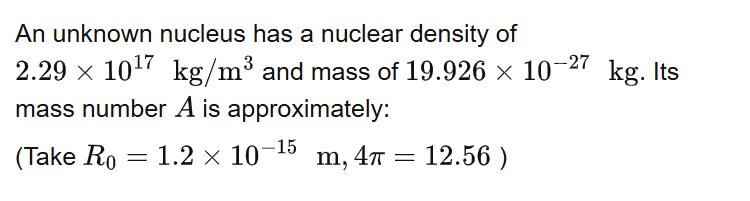
A. 12
B. 20
C. 16
D. 19
View answer and available explanation
Correct Option: A
Answer A follows the ExamSIDE indexed key. See the credited source; not independently verified against an official final key.
Q33Physics
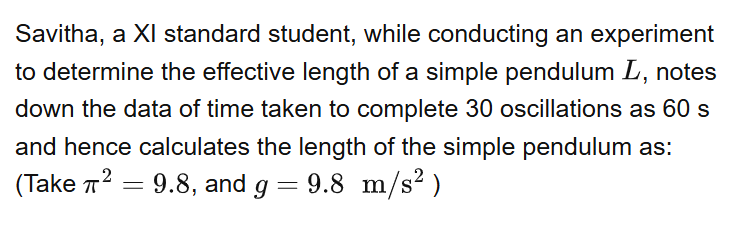
A. 0.75 m
B. 1.5 m
C. 2 m
D. 1 m
View answer and available explanation
Correct Option: D
Answer D follows the ExamSIDE indexed key. See the credited source; not independently verified against an official final key.
Q34Physics
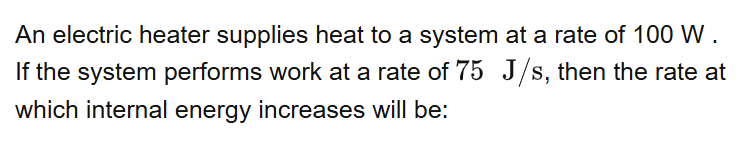
A. 75 W
B. 100 W
C. 125 W
D. 25 W
View answer and available explanation
Correct Option: D
Answer D follows the ExamSIDE indexed key. See the credited source; not independently verified against an official final key.
Q35Physics
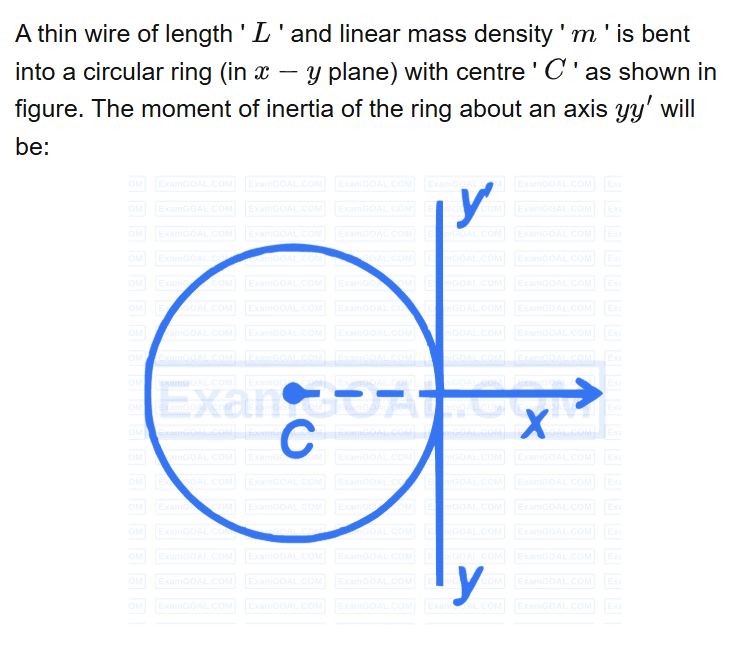
A. 
B. 
C. 
D. 
View answer and available explanation
Correct Option: B
Answer B follows the ExamSIDE indexed key. See the credited source; not independently verified against an official final key.
Q36Physics
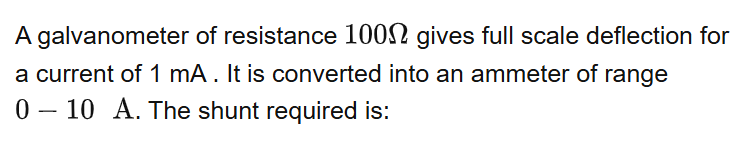
A. 
B. 
C. 
D. 
View answer and available explanation
Correct Option: A
Answer A follows the ExamSIDE indexed key. See the credited source; not independently verified against an official final key.
Q37Physics
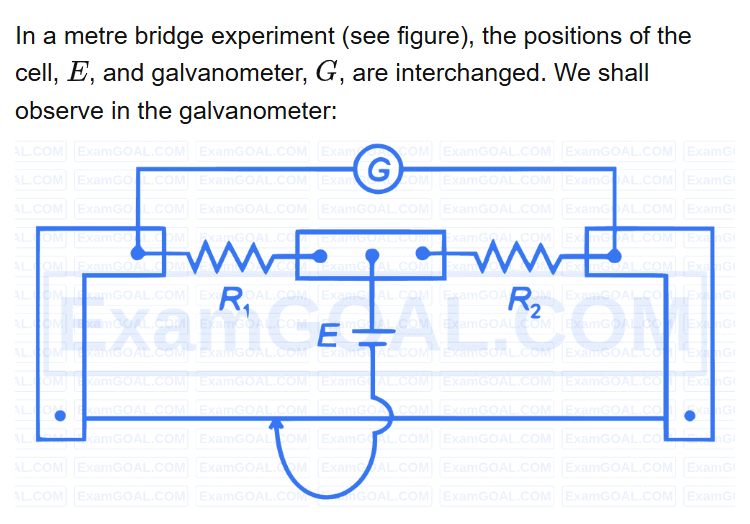
A. Only the left-sided deflection
B. There will be no deflection irrespective of the position of the jockey
C. Only the right-sided deflection
D. Both right-sided and left-sided deflection and at balance point, no deflection
View answer and available explanation
Correct Option: D
Answer D follows the ExamSIDE indexed key. See the credited source; not independently verified against an official final key.
Q38Physics
The peak value of an alternating current is 5 A and frequency is 60 Hz . How long will the current, starting from zero, take to reach the peak value?
A. 
B. 
C. 
D. 
View answer and available explanation
Correct Option: D
Answer D follows the ExamSIDE indexed key. See the credited source; not independently verified against an official final key.
Q39Physics
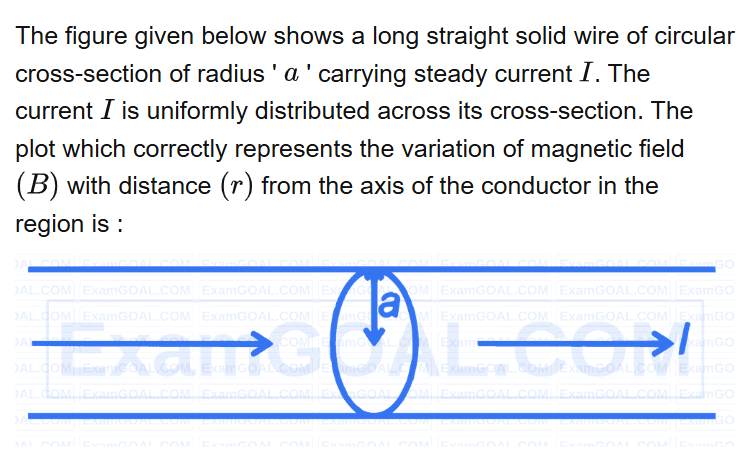
A. 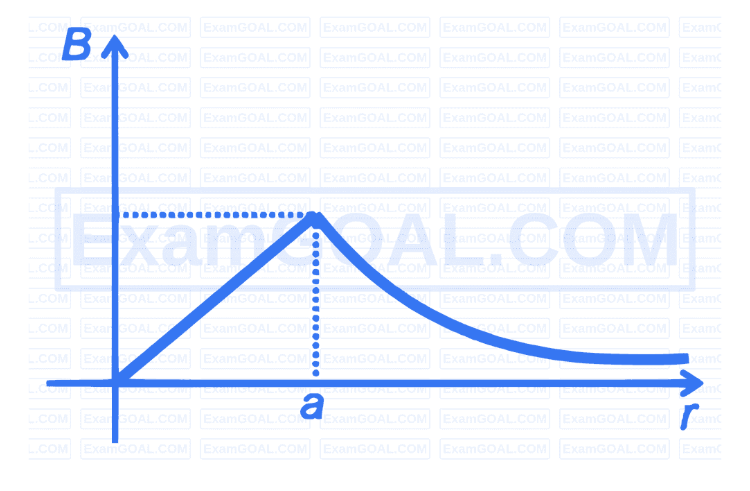
B. 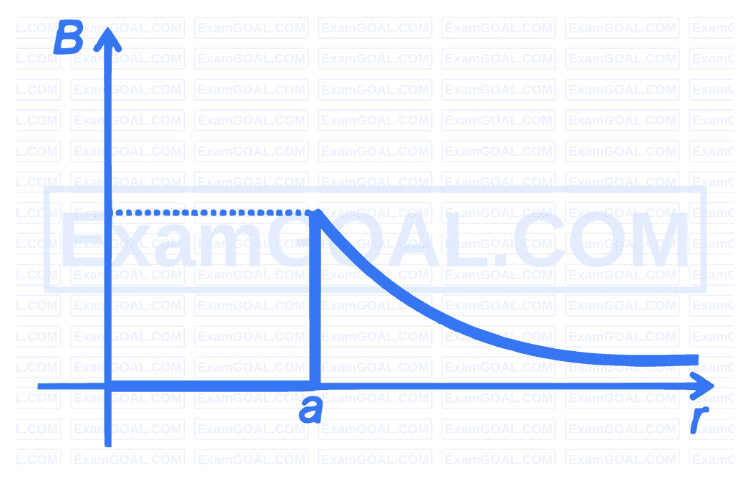
C. 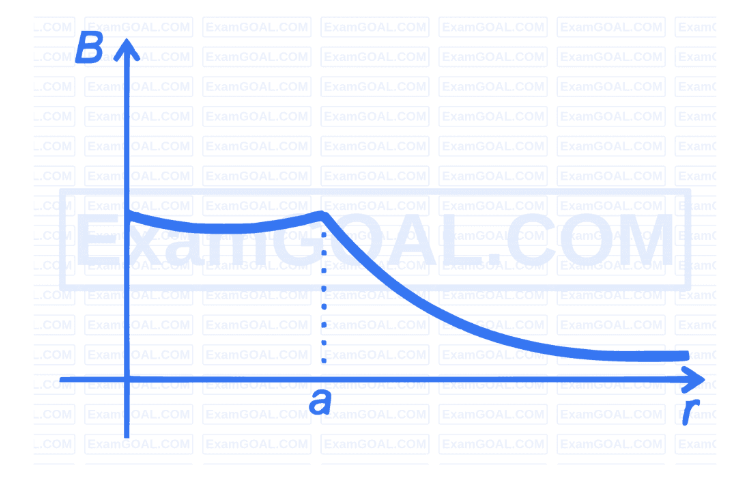
D. 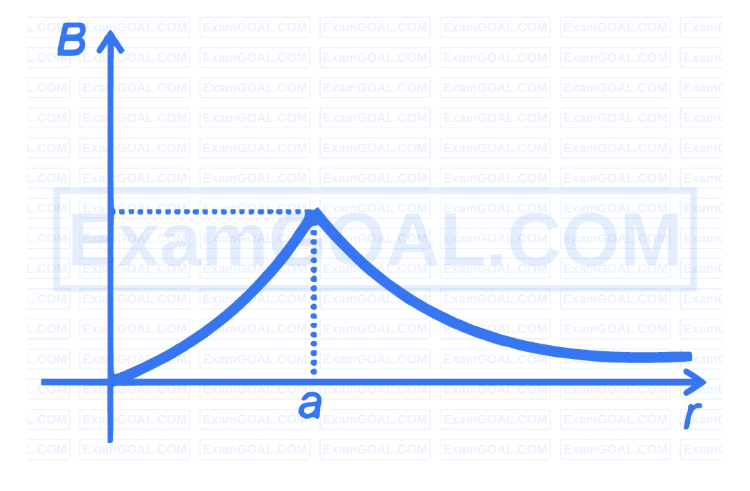
View answer and available explanation
Correct Option: A
Answer A follows the ExamSIDE indexed key. See the credited source; not independently verified against an official final key.
Q40Physics
Two statements are given below:
A. When the forward bias voltage across a p-n junction diode increases above a certain threshold voltage, the diode current increases significantly.
B. This current is called reverse saturation current.
Choose the correct answer from the options given below:
A. Both Statements A and B are true
B. Statement A is true, but Statement B is false
C. 
D. Statement A is false, but Statement B is true
View answer and available explanation
Correct Option: B
Answer B follows the ExamSIDE indexed key. See the credited source; not independently verified against an official final key.
Q41Physics
Which of the following statements are correct?
A. Inside a conductor, the electrostatic field is zero.
B. Electric field at the surface of a charged conductor does not depend on its surface charge density.
C. The interior of a charged conductor can have no excess charge in the static situation.
D. At the surface of a charged conductor, the electrostatic field must be normal to the surface at every point.
E. The electrostatic potential is zero everywhere inside a charged conductor.
Choose the correct answer from the options given below:
A. A, B and D only
B. A, C and E only
C. A, C and D only
D. C, D and E only
View answer and available explanation
Correct Option: C
Answer C follows the ExamSIDE indexed key. See the credited source; not independently verified against an official final key.
Q42Physics
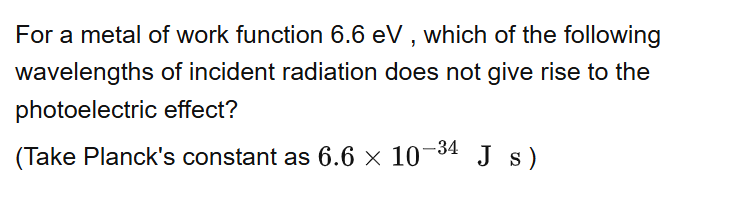
A. 100 nm
B. 150 nm
C. 200 nm
D. 50 nm
View answer and available explanation
Correct Option: C
Answer C follows the ExamSIDE indexed key. See the credited source; not independently verified against an official final key.
Q43Physics
In a concave lens, a ray of light emanating from the object parallel to the principal axis of the lens after refraction:
A. 
B. appears to diverge from the first principal focus.
C. emerges parallel to the principal axis.
D. passes through the second principal focus.
View answer and available explanation
Correct Option: B
Answer B follows the ExamSIDE indexed key. See the credited source; not independently verified against an official final key.
Q44Physics
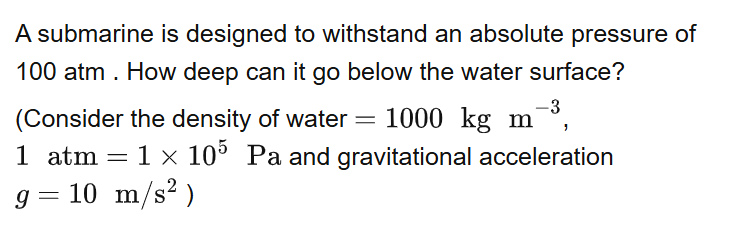
A. 990 m
B. 9900 m
C. 99 m
D. 9000 m
View answer and available explanation
Correct Option: A
Answer A follows the ExamSIDE indexed key. See the credited source; not independently verified against an official final key.
Q45Physics
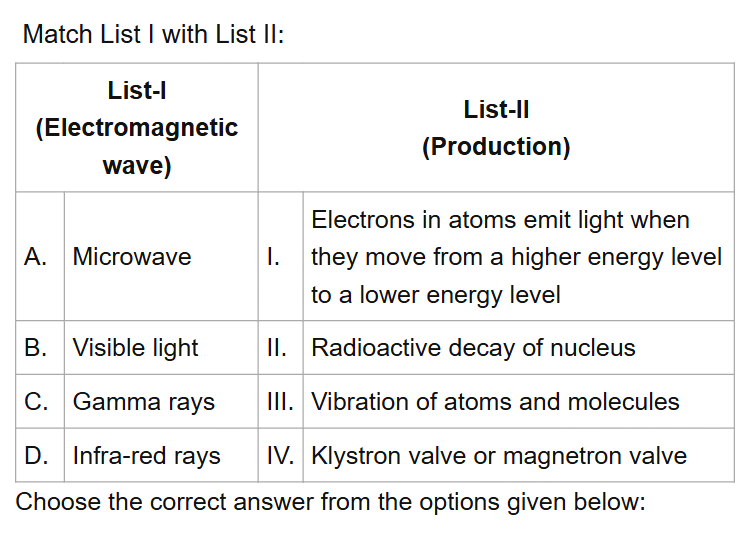
A. A-III, B-I, C-II, D-IV
B. A-III, B-IV, C-I, D-II
C. A-IV, B-I, C-II, D-III
D. A-IV, B-III, C-II, D-I
View answer and available explanation
Correct Option: C
Answer C follows the ExamSIDE indexed key. See the credited source; not independently verified against an official final key.
Q46Chemistry
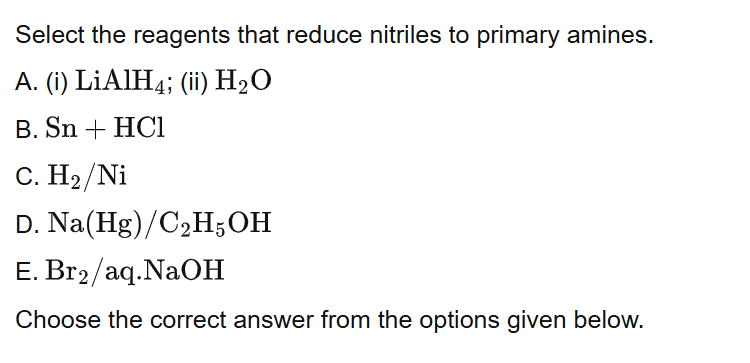
A. B, D and E only
B. A, C and D only
C. A, D and E only
D. A, B and C only
View answer and available explanation
Correct Option: B
Answer B follows the ExamSIDE indexed key. See the credited source; not independently verified against an official final key.
Q47Chemistry
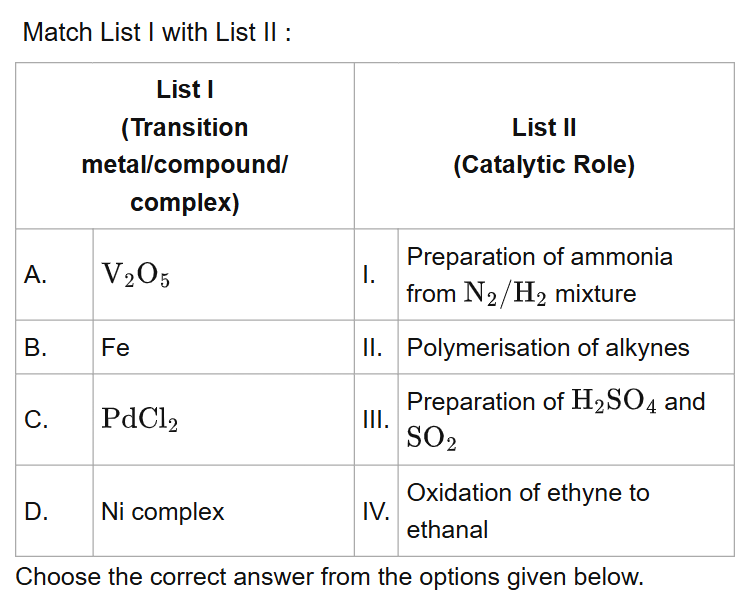
A. A-III, B-IV, C-I, D-II
B. A-IV, B-I, C-III, D-II
C. A-II, B-I, C-IV, D-III
D. A-III, B-I, C-IV, D-II
View answer and available explanation
Correct Option: D
Answer D follows the ExamSIDE indexed key. See the credited source; not independently verified against an official final key.
Q48Chemistry
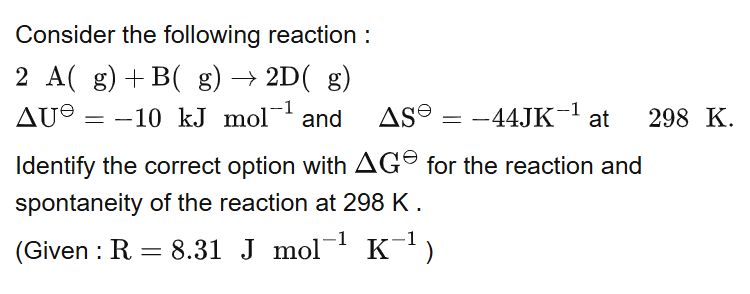
A. 
B. 
C. 
D. 
View answer and available explanation
Correct Option: C
Answer C follows the ExamSIDE indexed key. See the credited source; not independently verified against an official final key.
Q49Chemistry
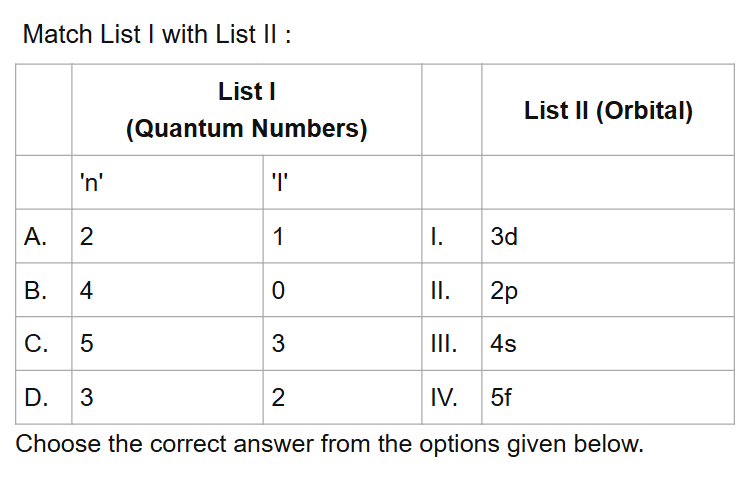
A. A-IV, B-II, C-III, D-I
B. A-II, B-III, C-I, D-IV
C. A-II, B-III, C-IV, D-I
D. A-I, B-II, C-III, D-IV
View answer and available explanation
Correct Option: C
Answer C follows the ExamSIDE indexed key. See the credited source; not independently verified against an official final key.
Q50Chemistry
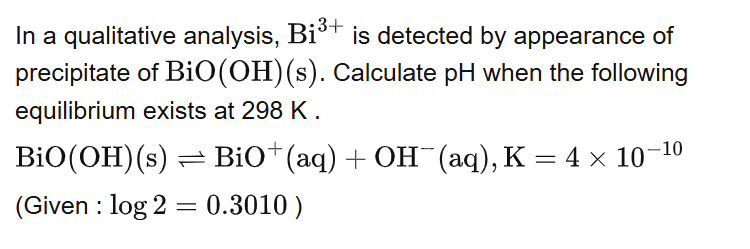
A. 8.714
B. 4.699
C. 5.286
D. 9.301
View answer and available explanation
Correct Option: D
Answer D follows the ExamSIDE indexed key. See the credited source; not independently verified against an official final key.
Q51Chemistry
The correct statement with regard to the secondary structure of DNA/RNA is
A. RNA possesses a single strand helix structure and contains thymine as one of the four bases
B. DNA possesses a double strand helix structure and contains thymine as one of the four bases
C. RNA possesses a double strand helix structure and contains uracil as one of the four bases
D. DNA possesses a single strand helix structure and contains uracil as one of the four bases
View answer and available explanation
Correct Option: B
Answer B follows the ExamSIDE indexed key. See the credited source; not independently verified against an official final key.
Q52Chemistry
The pair of molecules that are metamers among the following is :
A. 
B. 
C. 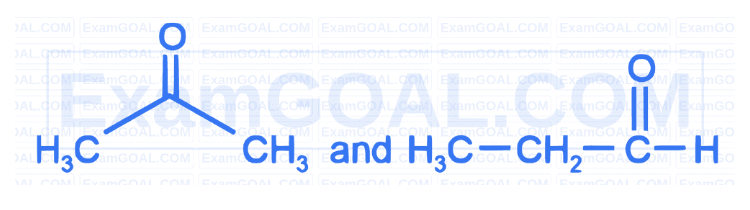
D. 
View answer and available explanation
Correct Option: D
Answer D follows the ExamSIDE indexed key. See the credited source; not independently verified against an official final key.
Q53Chemistry
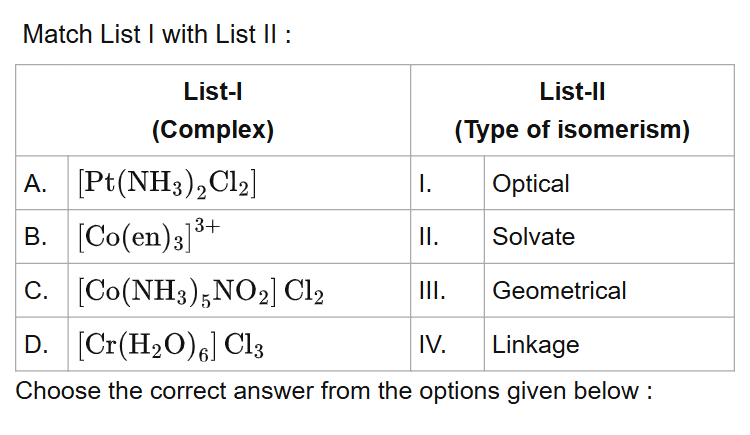
A. A-III, B-I, C-II, D-IV
B. A-I, B-III, C-II, D-IV
C. A-II, B-IV, C-III, D-I
D. A-III, B-I, C-IV, D-II
View answer and available explanation
Correct Option: D
Answer D follows the ExamSIDE indexed key. See the credited source; not independently verified against an official final key.
Q54Chemistry
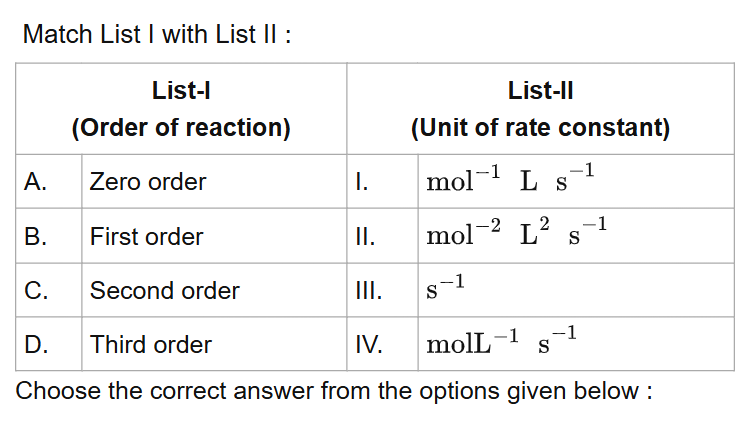
A. A-IV, B-II, C-I, D-III
B. A-IV, B-III, C-I, D-II
C. A-IV, B-III, C-II, D-I
D. A-I, B-II, C-III, D-IV
View answer and available explanation
Correct Option: B
Answer B follows the ExamSIDE indexed key. See the credited source; not independently verified against an official final key.
Q55Chemistry
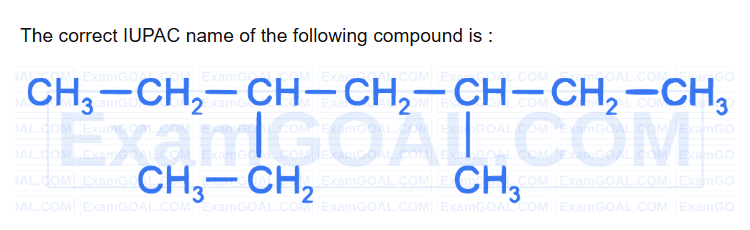
A. 3-ethyl-5-methylheptane
B. 2,4-diethylhexane
C. 3-methyl-5-ethylheptane
D. 3,5-diethylhexane
View answer and available explanation
Correct Option: A
Answer A follows the ExamSIDE indexed key. See the credited source; not independently verified against an official final key.
Q56Chemistry
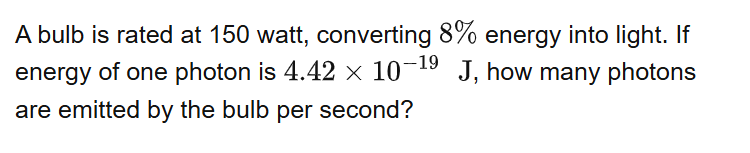
A. 
B. 
C. 
D. 
View answer and available explanation
Correct Option: A
Answer A follows the ExamSIDE indexed key. See the credited source; not independently verified against an official final key.
Q57Chemistry
Methane reacts with steam at 1273 K in the presence of nickel catalyst to form :
A. 
B. 
C. 
D. 
View answer and available explanation
Correct Option: C
Answer C follows the ExamSIDE indexed key. See the credited source; not independently verified against an official final key.
Q58Chemistry
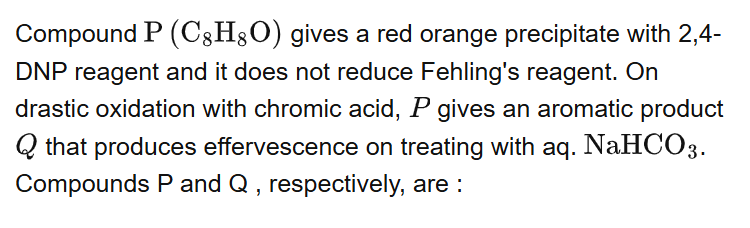
A. 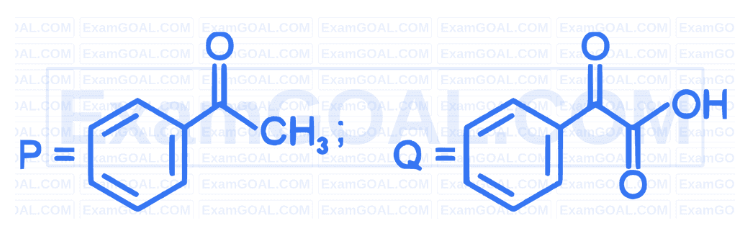
B. 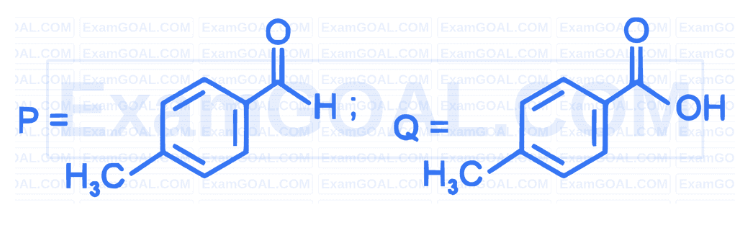
C. 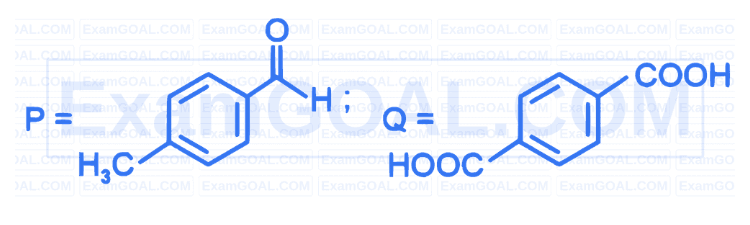
D. 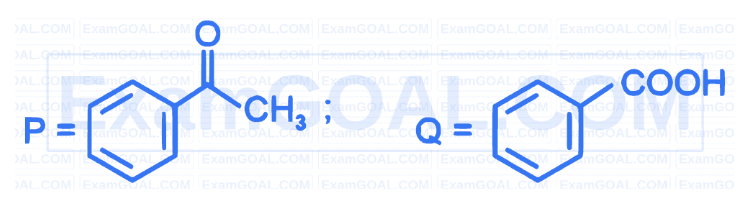
View answer and available explanation
Correct Option: D
Answer D follows the ExamSIDE indexed key. See the credited source; not independently verified against an official final key.
Q59Chemistry
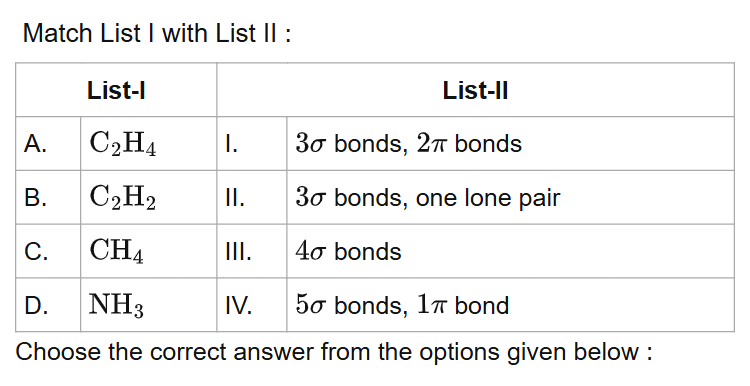
A. A-III, B-IV, C-II, D-I
B. A-IV, B-I, C-III, D-II
C. A-I, B-II, C-IV, D-III
D. A-II, B-III, C-I, D-IV
View answer and available explanation
Correct Option: B
Answer B follows the ExamSIDE indexed key. See the credited source; not independently verified against an official final key.
Q60Chemistry
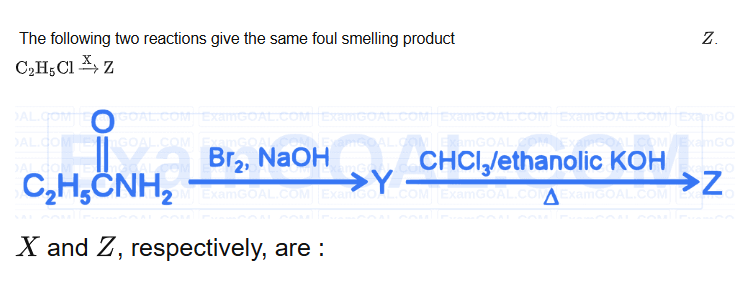
A. 
B. 
C. 
D. 
View answer and available explanation
Correct Option: A
Answer A follows the ExamSIDE indexed key. See the credited source; not independently verified against an official final key.
Q61Chemistry
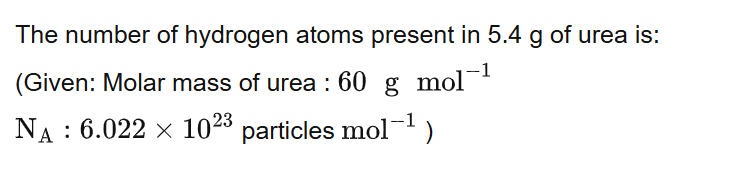
A. 
B. 
C. 
D. 
View answer and available explanation
Correct Option: D
Answer D follows the ExamSIDE indexed key. See the credited source; not independently verified against an official final key.
Q62Chemistry
Identify the incorrect statement from the following:
A. 
B. 
C. Phosphorus, arsenic and antimony show catenation property.
D. 
View answer and available explanation
Correct Option: D
Answer D follows the ExamSIDE indexed key. See the credited source; not independently verified against an official final key.
Q63Chemistry
Which one of the following is an ambidentate ligand?
A. Ethane-1,2-diamine
B. Ethylenediaminetetraacetate ion
C. Thiocyanate
D. Oxalate
View answer and available explanation
Correct Option: C
Answer C follows the ExamSIDE indexed key. See the credited source; not independently verified against an official final key.
Q64Chemistry

A. 
B. 
C. 
D. 
View answer and available explanation
Correct Option: A
Answer A follows the ExamSIDE indexed key. See the credited source; not independently verified against an official final key.
Q65Chemistry
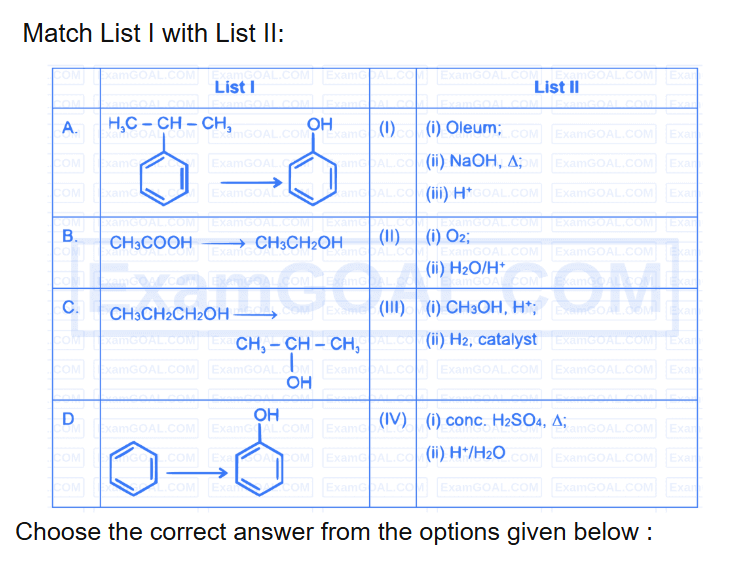
A. A-II, B-III, C-I, D-IV
B. A-II, B-III, C-IV, D-I
C. A-II, B-IV, C-III, D-I
D. A-I, B-III, C-IV, D-II
View answer and available explanation
Correct Option: B
Answer B follows the ExamSIDE indexed key. See the credited source; not independently verified against an official final key.
Q66Chemistry
Although +3 oxidation state is most common in lanthanoids, cerium still shows +4 oxidation state because:
A. 
B. Its nearest inert gas is Radon.
C. Its atomic number is 61 .
D. 
View answer and available explanation
Correct Option: D
Answer D follows the ExamSIDE indexed key. See the credited source; not independently verified against an official final key.
Q67Chemistry
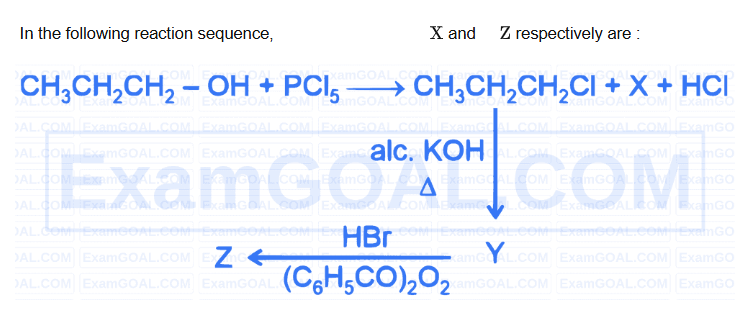
A. 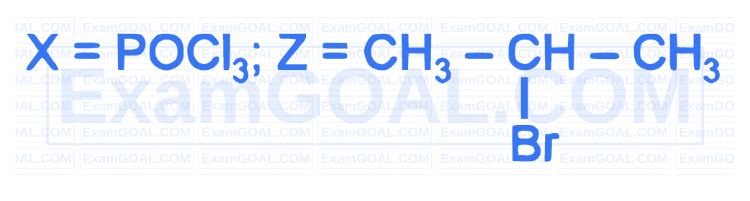
B. 
C. 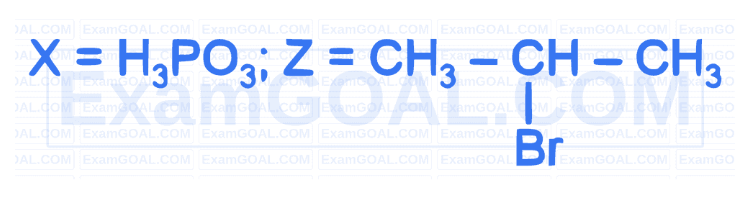
D. 
View answer and available explanation
Correct Option: B
Answer B follows the ExamSIDE indexed key. See the credited source; not independently verified against an official final key.
Q68Chemistry
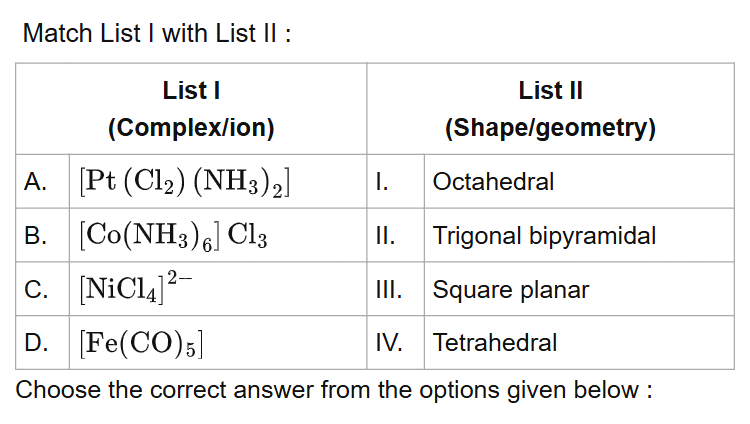
A. A-III, B-IV, C-I, D-II
B. A-III, B-I, C-IV, D-II
C. A-IV, B-I, C-III, D-II
D. A-I, B-III, C-IV, D-II
View answer and available explanation
Correct Option: B
Answer B follows the ExamSIDE indexed key. See the credited source; not independently verified against an official final key.
Q69Chemistry
The functional group that can be identified through phthalein dye test is :
A. Aldehyde
B. Phenolic
C. Carboxylic acid
D. Alcohol
View answer and available explanation
Correct Option: B
Answer B follows the ExamSIDE indexed key. See the credited source; not independently verified against an official final key.
Q70Chemistry
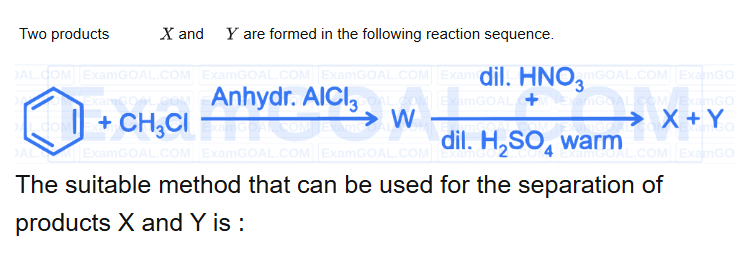
A. Fractional distillation
B. Sublimation
C. Differential extraction
D. Continuous extraction
View answer and available explanation
Correct Option: A
Answer A follows the ExamSIDE indexed key. See the credited source; not independently verified against an official final key.
Q71Chemistry
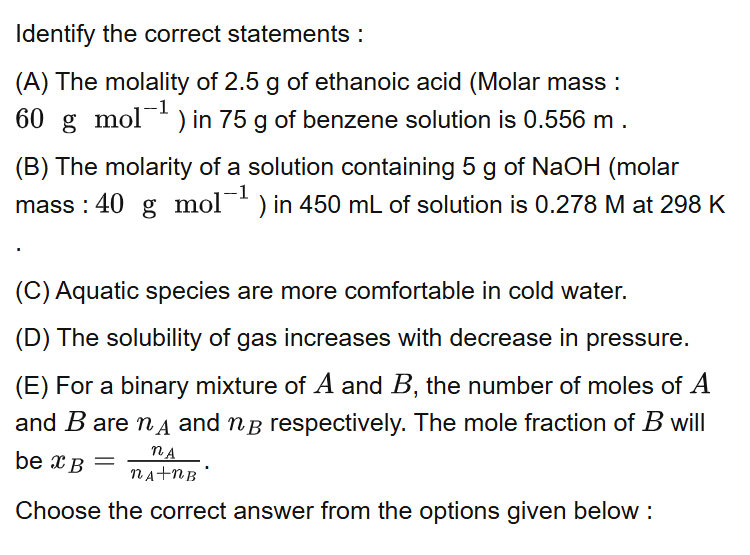
A. A, B and C only
B. A and B only
C. A and C only
D. A, D and E only
View answer and available explanation
Correct Option: A
Answer A follows the ExamSIDE indexed key. See the credited source; not independently verified against an official final key.
Q72Chemistry
During Lassaigne's test, the elements present in an organic compound are converted from :
A. Ionic form to ionic form
B. Covalent form to ionic form
C. Covalent form to covalent form
D. Ionic form to covalent form
View answer and available explanation
Correct Option: B
Answer B follows the ExamSIDE indexed key. See the credited source; not independently verified against an official final key.
Q73Chemistry
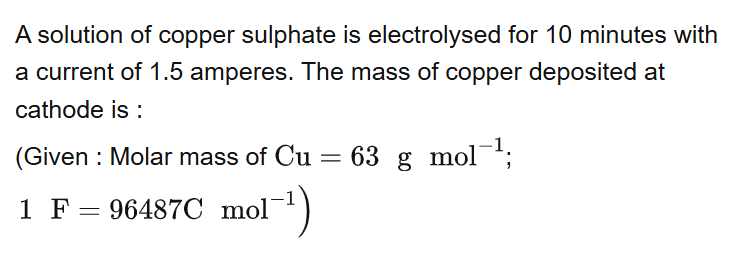
A. 1.7018 g
B. 0.2938 g
C. 2.4036 g
D. 0.5876 g
View answer and available explanation
Correct Option: B
Answer B follows the ExamSIDE indexed key. See the credited source; not independently verified against an official final key.
Q74Chemistry
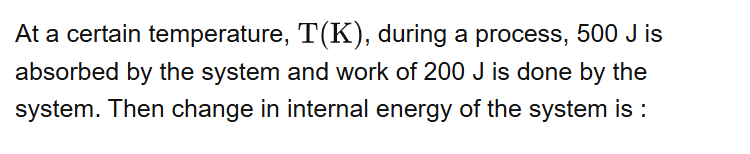
A. 400 J
B. 300 J
C. 700 J
D. 500 J
View answer and available explanation
Correct Option: B
Answer B follows the ExamSIDE indexed key. See the credited source; not independently verified against an official final key.
Q75Chemistry
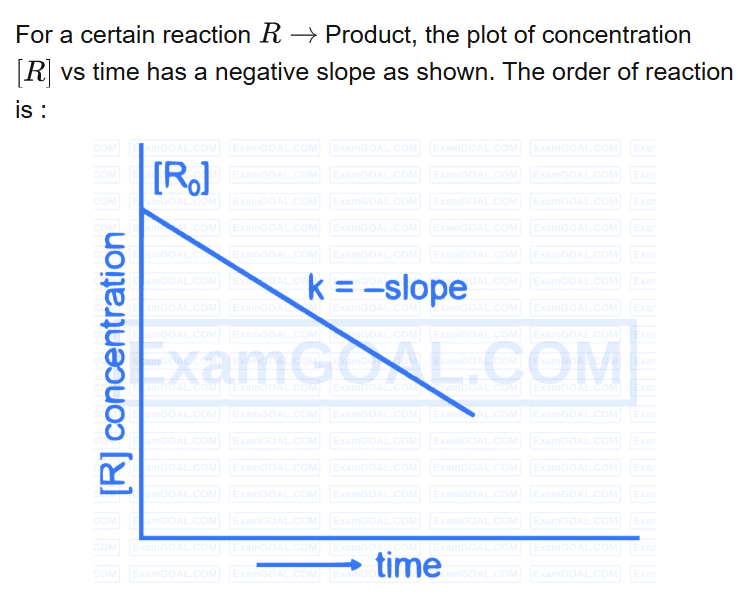
A. 0
B. 1
C. 2
D. 2.5
View answer and available explanation
Correct Option: A
Answer A follows the ExamSIDE indexed key. See the credited source; not independently verified against an official final key.
Q76Chemistry

A. It has T-shaped geometry with two lone pairs on Cl atom.
B. It has T-shaped geometry with three lone pairs on Cl atom.
C. It has a trigonal pyramidal geometry with two lone pairs on Cl atom.
D. It has a planar trigonal geometry with two lone pairs on Cl atom.
View answer and available explanation
Correct Option: A
Answer A follows the ExamSIDE indexed key. See the credited source; not independently verified against an official final key.
Q77Chemistry
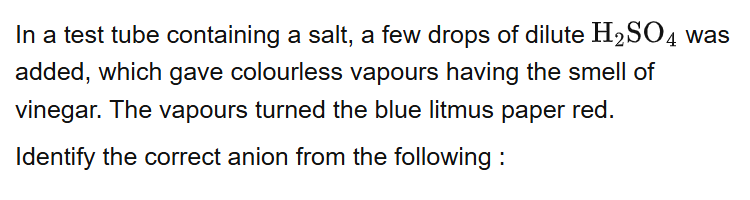
A. 
B. 
C. 
D. 
View answer and available explanation
Correct Option: C
Answer C follows the ExamSIDE indexed key. See the credited source; not independently verified against an official final key.
Q78Chemistry
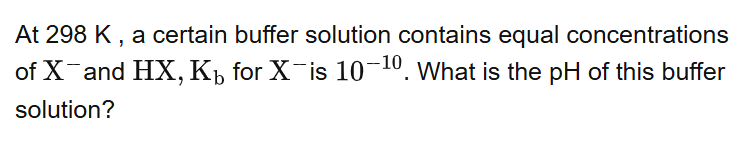
A. 2
B. 4
C. 6
D. 10
View answer and available explanation
Correct Option: B
Answer B follows the ExamSIDE indexed key. See the credited source; not independently verified against an official final key.
Q79Chemistry
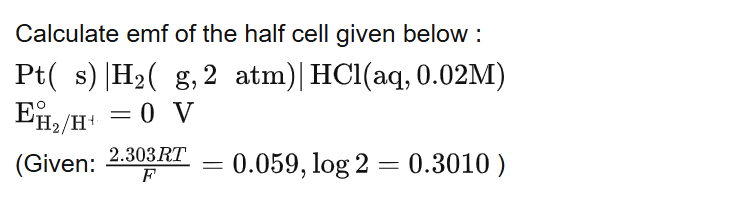
A. -0.109 V
B. 0.035 V
C. -0.035 V
D. 0.109 V
View answer and available explanation
Correct Option: D
Answer D follows the ExamSIDE indexed key. See the credited source; not independently verified against an official final key.
Q80Chemistry

A. 5.92 BM
B. 3.87 BM
C. 2.84 BM
D. 4.90 BM
View answer and available explanation
Correct Option: C
Answer C follows the ExamSIDE indexed key. See the credited source; not independently verified against an official final key.
Q81Chemistry
Identify the incorrect statement from the following:
A. 
B. 
C. 
D. Oxygen exhibits only -2 oxidation state.
View answer and available explanation
Correct Option: D
Answer D follows the ExamSIDE indexed key. See the credited source; not independently verified against an official final key.
Q82Chemistry
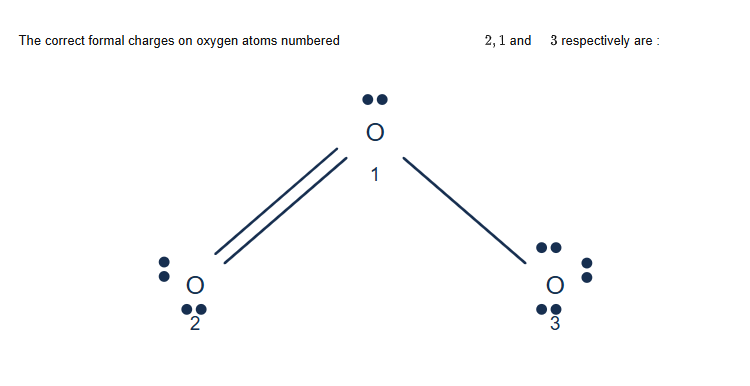
A. 
B. 
C. 
D. 
View answer and available explanation
Correct Option: B
Answer B follows the ExamSIDE indexed key. See the credited source; not independently verified against an official final key.
Q83Chemistry
Phenolphthalein is used as an indicator for the titration of sodium hydroxide solution against a standard solution of oxalic acid. The colour change that is observed at an alkaline pH close to the equivalence point during this titration is:
A. pinkish red to yellow
B. yellow to pinkish red
C. pink to colourless
D. colourless to pink
View answer and available explanation
Correct Option: D
Answer D follows the ExamSIDE indexed key. See the credited source; not independently verified against an official final key.
Q84Chemistry
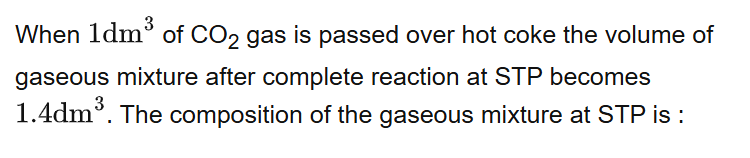
A. 
B. 
C. 
D. 
View answer and available explanation
Correct Option: B
Answer B follows the ExamSIDE indexed key. See the credited source; not independently verified against an official final key.
Q85Chemistry
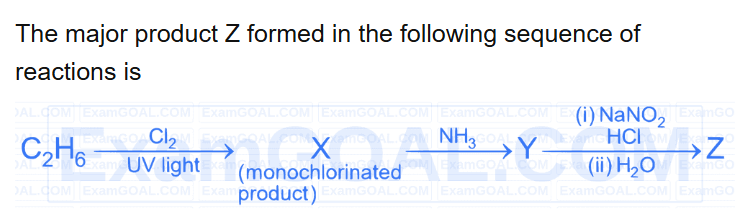
A. 
B. 
C. 
D. 
View answer and available explanation
Correct Option: C
Answer C follows the ExamSIDE indexed key. See the credited source; not independently verified against an official final key.
Q86Chemistry
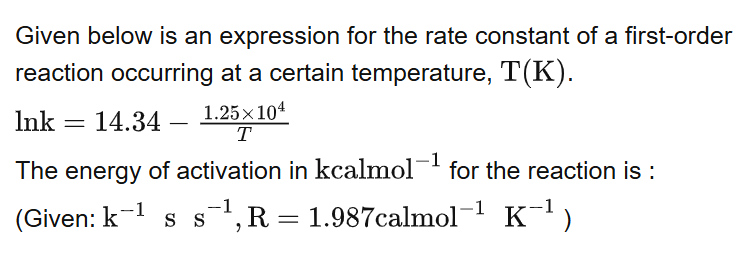
A. 24.84
B. 14.34
C. 18.63
D. 12.42
View answer and available explanation
Correct Option: A
Answer A follows the ExamSIDE indexed key. See the credited source; not independently verified against an official final key.
Q87Chemistry

A. 
B. 
C. 
D. 
View answer and available explanation
Correct Option: B
Answer B follows the ExamSIDE indexed key. See the credited source; not independently verified against an official final key.
Q88Chemistry
Identify the incorrect statement from the following :
A. 
B. The IUPAC name of the element with atomic number 107 is Unnilseptium.
C. The similarity in behaviour of Li with Mg is referred to as 'diagonal relationship'
D. 
View answer and available explanation
Correct Option: A
Answer A follows the ExamSIDE indexed key. See the credited source; not independently verified against an official final key.
Q89Chemistry
Mixture of chloroform and acetone forms a solution with negative deviation from Raoult's law due to :
A. Increase in escaping tendency of molecules of each component.
B. Formation of hydrogen bonding between acetone and chloroform
C. Stronger intermolecular forces between chloroform molecules than those between chloroform and acetone molecules.
D. Repulsive forces.
View answer and available explanation
Correct Option: B
Answer B follows the ExamSIDE indexed key. See the credited source; not independently verified against an official final key.
Q90Chemistry
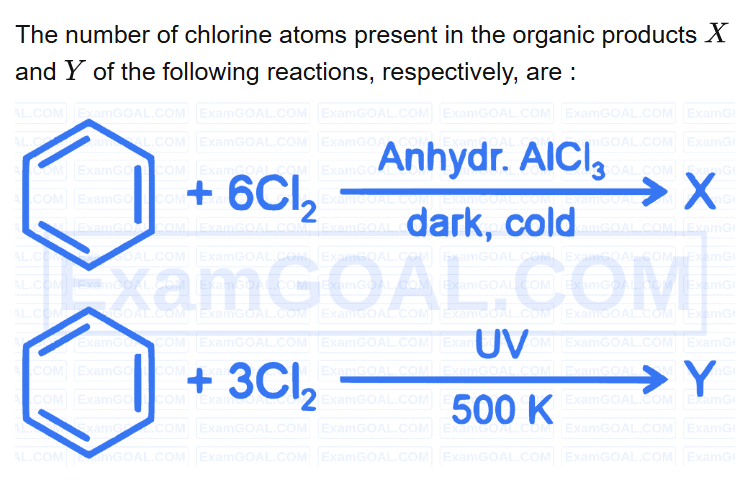
A. 3 and 3
B. 6 and 3
C. 6 and 6
D. 3 and 6
View answer and available explanation
Correct Option: C
Answer C follows the ExamSIDE indexed key. See the credited source; not independently verified against an official final key.
Q91Biology
In angiosperms, root hairs arise from which one of the following regions of the root?
A. The root cap zone
B. The region of meristematic activity
C. The region of elongation
D. The region of maturation
View answer and available explanation
Correct Option: D
Answer D follows the ExamSIDE indexed key. See the credited source; not independently verified against an official final key.
Q92Biology
In which one of the following, the ovules are not enclosed by an ovary wall and remain exposed?
A. Funaria
B. Pinus
C. Selaginella
D. Wolffia
View answer and available explanation
Correct Option: B
Answer B follows the ExamSIDE indexed key. See the credited source; not independently verified against an official final key.
Q93Biology

A. permease
B. transacetylase
C. beta-galactosidase
D. the repressor of lac operon
View answer and available explanation
Correct Option: C
Answer C follows the ExamSIDE indexed key. See the credited source; not independently verified against an official final key.
Q94Biology
Exploring molecular, genetic and species-level diversity for products of economic importance is called
A. Biofortification
B. Bioremediation
C. Bioprospecting
D. Biomagnification
View answer and available explanation
Correct Option: C
Answer C follows the ExamSIDE indexed key. See the credited source; not independently verified against an official final key.
Q95Biology
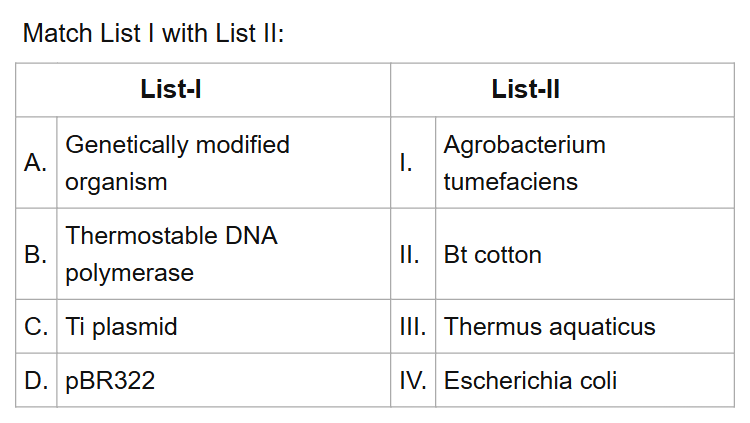
A. A-II, B-III, C-I, D-IV
B. A-II, B-I, C-IV, D-III
C. A-I, B-IV, C-III, D-II
D. A-I, B-II, C-IV, D-III
View answer and available explanation
Correct Option: A
Answer A follows the ExamSIDE indexed key. See the credited source; not independently verified against an official final key.
Q96Biology
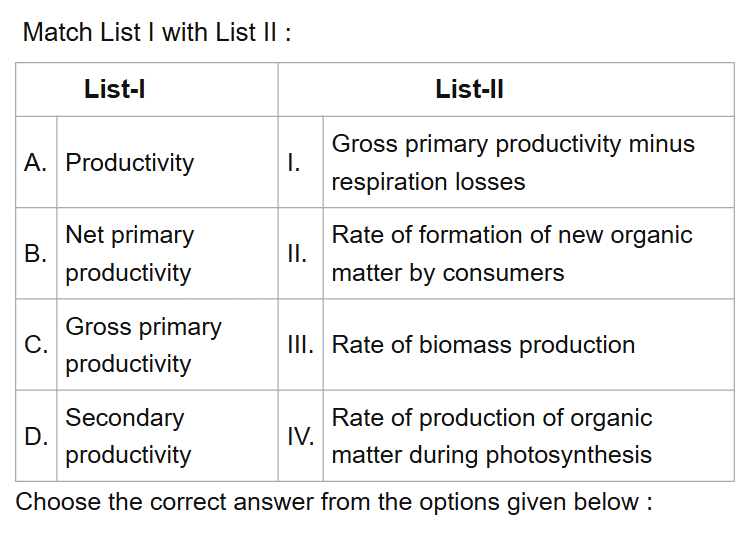
A. A-III, B-I, C-IV, D-II
B. A-I, B-II, C-III, D-IV
C. A-I, B-III, C-IV, D-II
D. A-III, B-I, C-II, D-IV
View answer and available explanation
Correct Option: A
Answer A follows the ExamSIDE indexed key. See the credited source; not independently verified against an official final key.
Q97Biology
Since the origin and diversification of life on Earth, there have been five episodes of mass extinction of species. How is the sixth extinction, which is in progress, different from the previous episodes?
A. The present net species extinction rate is zero.
B. The current species extinction rate is nearly 10 times faster than in previous episodes.
C. The present species extinction rates are 100 to 1000 times faster than in the pre-human times.
D. The current species extinction rates are far lower than those in previous episodes.
View answer and available explanation
Correct Option: C
Answer C follows the ExamSIDE indexed key. See the credited source; not independently verified against an official final key.
Q98Biology
Alpha-helix is found in which level of protein structure?
A. Secondary structure
B. Tertiary structure
C. Primary structure
D. Quaternary structure
View answer and available explanation
Correct Option: A
Answer A follows the ExamSIDE indexed key. See the credited source; not independently verified against an official final key.
Q99Biology
The main function of bulliform cells in grasses is :
A. to make the leaf impermeable to fungal spores.
B. to transport water.
C. to perform photosynthesis.
D. to minimize water loss during water stress.
View answer and available explanation
Correct Option: D
Answer D follows the ExamSIDE indexed key. See the credited source; not independently verified against an official final key.
Q100Biology
Identify the correct sequence of steps in each cycle of Polymerase Chain Reaction :
A. Extension → Annealing → Denaturation
B. Annealing → Denaturation → Extension
C. Denaturation → Extension → Annealing
D. Denaturation → Annealing → Extension
View answer and available explanation
Correct Option: D
Answer D follows the ExamSIDE indexed key. See the credited source; not independently verified against an official final key.
Q101Biology
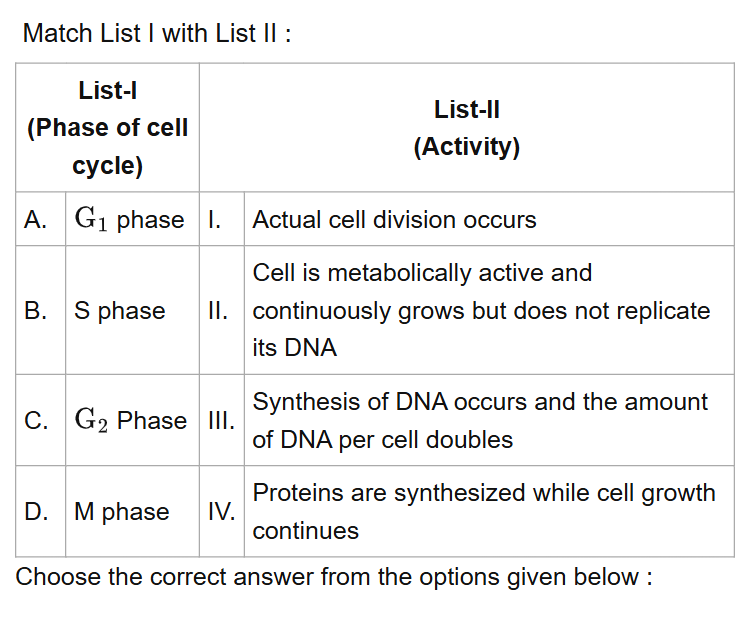
A. A-IV, B-I, C-II, D-III
B. A-I, B-II, C-III, D-IV
C. A-III, B-IV, C-I, D-II
D. A-II, B-III, C-IV, D-I
View answer and available explanation
Correct Option: D
Answer D follows the ExamSIDE indexed key. See the credited source; not independently verified against an official final key.
Q102Biology
Which of the following statements are correct?
A. The Amazon rainforest being cut and cleared for cultivation of soyabeans is an example of habitat loss.
B. Steller's sea cow and passenger pigeon became extinct due to over-exploitation by humans.
C. The Nile perch introduced into Lake Victoria in East Africa helped in population growth of cichlid fish in the lake.
D. Water hyacinth is an invasive species.
E. When a species becomes extinct, the plant and animal species associated with it are not affected.
Choose the correct answer from the options given below:
A. A, B and E only
B. A, B and D only
C. C, D and E only
D. B, C and D only
View answer and available explanation
Correct Option: B
Answer B follows the ExamSIDE indexed key. See the credited source; not independently verified against an official final key.
Q103Biology
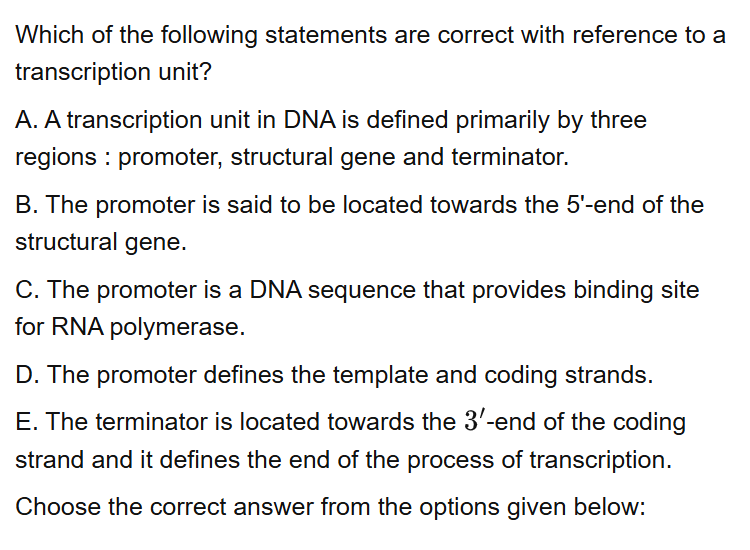
A. A, B, C and D only
B. A, C, D and E only
C. B, C, D and E only
D. A, B, C, D and E
View answer and available explanation
Correct Option: D
Answer D follows the ExamSIDE indexed key. See the credited source; not independently verified against an official final key.
Q104Biology
Which one of the following statements is not true about the universal rules of binomial nomenclature?
A. Biological names are generally in Latin
B. Both the words in a biological name, when handwritten, are separately underlined or printed in italics
C. The specific epithet in the biologial name starts with a small letter
D. The first word in the biological name represents the specific epithet, while the second component denotes the genus
View answer and available explanation
Correct Option: D
Answer D follows the ExamSIDE indexed key. See the credited source; not independently verified against an official final key.
Q105Biology
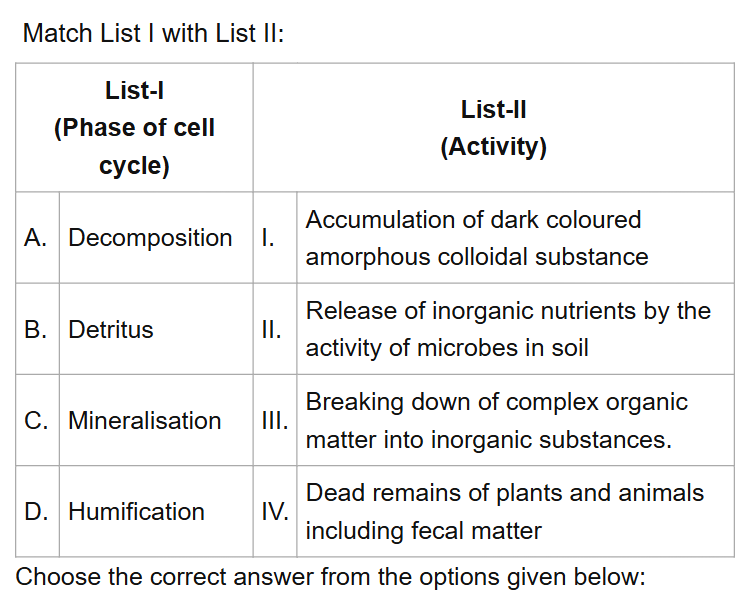
A. A-IV, B-III, C-I, D-II
B. A-III, B-IV, C-II, D-I
C. A-I, B-II, C-III, D-IV
D. A-III, B-II, C-I, D-IV
View answer and available explanation
Correct Option: B
Answer B follows the ExamSIDE indexed key. See the credited source; not independently verified against an official final key.
Q106Biology
Which one of the following is the site for active ribosomal RNA synthesis?
A. Centrosome
B. Chromatin
C. Nucleolus
D. Kinetochore
View answer and available explanation
Correct Option: C
Answer C follows the ExamSIDE indexed key. See the credited source; not independently verified against an official final key.
Q107Biology
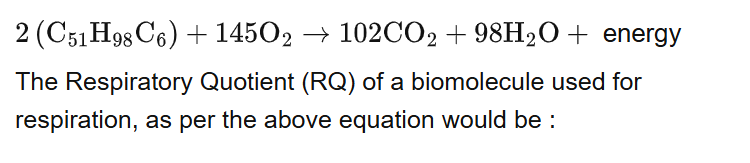
A. Between 0.5 and 0.95
B. Less than 0.5
C. 1.0
D. Between 1.25 and 2
View answer and available explanation
Correct Option: A
Answer A follows the ExamSIDE indexed key. See the credited source; not independently verified against an official final key.
Q108Biology
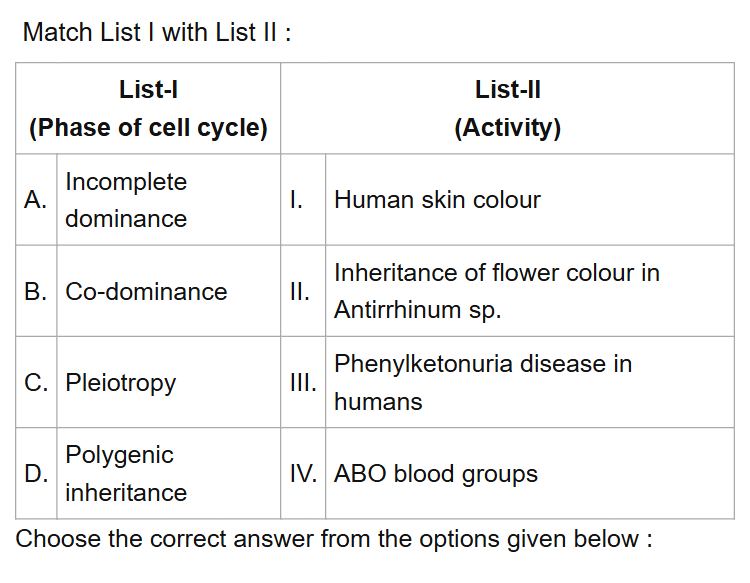
A. A-II, B-IV, C-III, D-I
B. A-I, B-III, C-II, D-IV
C. A-I, B-IV, C-III, D-II
D. A-II, B-I, C-III, D-IV
View answer and available explanation
Correct Option: A
Answer A follows the ExamSIDE indexed key. See the credited source; not independently verified against an official final key.
Q109Biology
Arrange the following steps of DNA fingerprinting in a correct sequence.
A. Isolation of DNA and its digestion by restriction endonucleases.
B. Hybridisation using a labelled VNTR probe.
C. Transferring of separated DNA fragments to synthetic membranes.
D. Detection of hybridised DNA fragments by autoradiography.
E. Separation of DNA fragments by electrophoresis.
Choose the correct answer from the options given below :
A. 
B. 
C. 
D. 
View answer and available explanation
Correct Option: C
Answer C follows the ExamSIDE indexed key. See the credited source; not independently verified against an official final key.
Q110Biology
Which of the following statements are correct with reference to packaging of DNA helix ?
A. Histones are organized to form a unit of eight molecules called histone octamer.
B. Histones are negatively charged basic proteins.
C. Histones are rich in the basic amino acid residues - lysine and arginine.
D. The positively charged DNA is wrapped around the histone octamer to form nucleosome.
E. The packaging of chromatin at higher levels requires an additional set of proteins called non-histone chromosomal proteins.
Choose the correct answer from the options given below :
A. A, C and E only
B. B, D and E only
C. C, D and E only
D. A, B and D only
View answer and available explanation
Correct Option: A
Answer A follows the ExamSIDE indexed key. See the credited source; not independently verified against an official final key.
Q111Biology
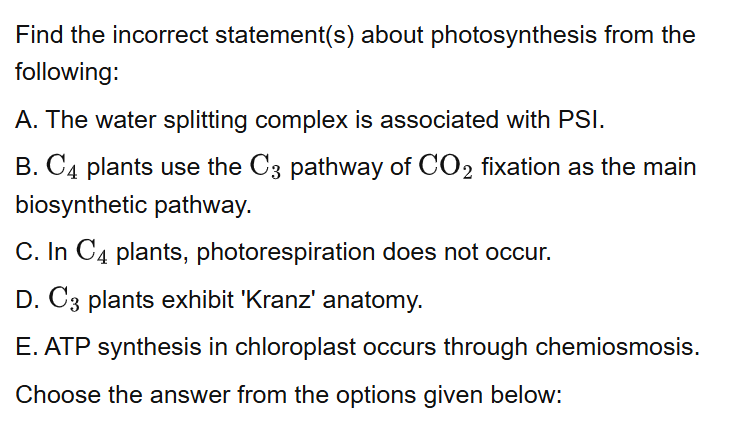
A. B and C only
B. B only
C. B and E only
D. A and D only
View answer and available explanation
Correct Option: D
Answer D follows the ExamSIDE indexed key. See the credited source; not independently verified against an official final key.
Q112Biology
Arrange the following steps of somatic hybridisation in a correct sequence.
A. Digestion of cell walls.
B. Isolation of naked protoplasts.
C. Fusion of protoplasts to get hybrid protoplast.
D. Isolation of single cells from two different varieites of plants.
E. Growing of hybrid protoplast to form a new plant.
Choose the correct answer from the options given below:
A. D, A, B, C, E
B. 
C. D, B, A, E, C
D. 
View answer and available explanation
Correct Option: A
Answer A follows the ExamSIDE indexed key. See the credited source; not independently verified against an official final key.
Q113Biology
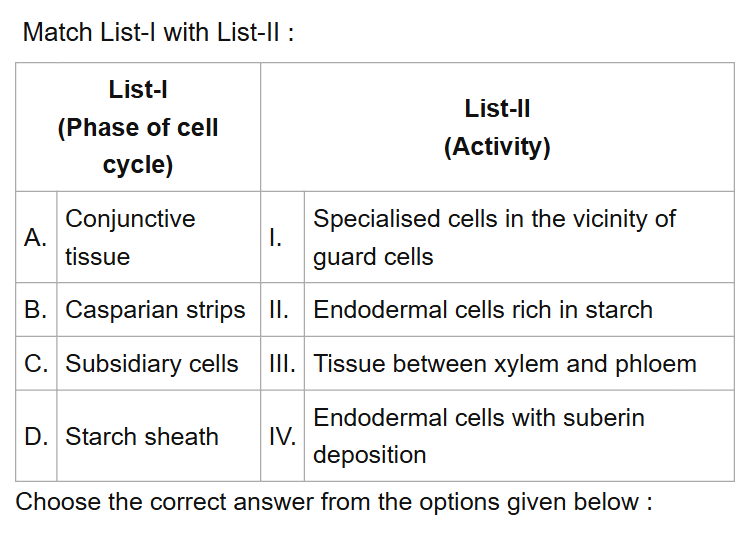
A. A-IV, B-III, C-I, D-II
B. A-III, B-IV, C-II, D-I
C. A-III, B-IV, C-I, D-II
D. A-IV, B-III, C-II, D-I
View answer and available explanation
Correct Option: C
Answer C follows the ExamSIDE indexed key. See the credited source; not independently verified against an official final key.
Q114Biology
Which one of the following is not a characteristic of plant cells in the phase of elongation?
A. New cell wall deposition
B. Cell enlargement
C. Increased vacuolation
D. Large conspicuous nuclei
View answer and available explanation
Correct Option: D
Answer D follows the ExamSIDE indexed key. See the credited source; not independently verified against an official final key.
Q115Biology
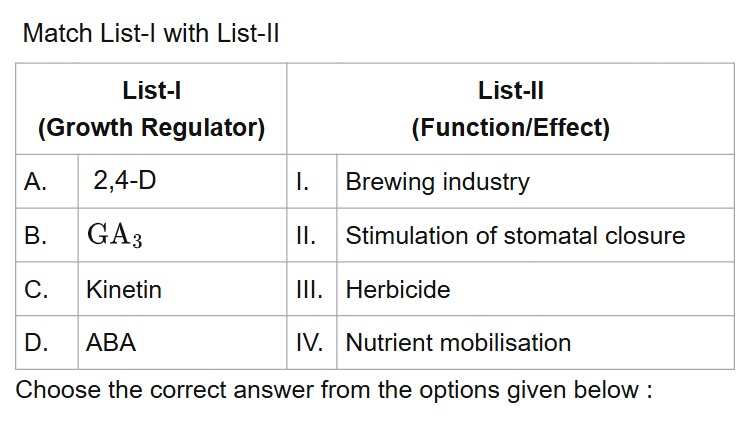
A. A-III, B-I, C-IV, D-II
B. A-IV, B-III, C-II, D-I
C. A-I, B-IV, C-III, D-II
D. A-I, B-II, C-IV, D-III
View answer and available explanation
Correct Option: A
Answer A follows the ExamSIDE indexed key. See the credited source; not independently verified against an official final key.
Q116Biology
The enzyme required for carboxylation in the Calvin cycle is
A. Hexokinase
B. PEP carboxylase
C. RuBP carboxylase - oxygenase
D. Carboxypeptidase
View answer and available explanation
Correct Option: C
Answer C follows the ExamSIDE indexed key. See the credited source; not independently verified against an official final key.
Q117Biology
How many ATP and NADPH molecules are required to make one molecule of glucose through the Calvin pathway?
A. 18 ATP and 12 NADPH
B. 12 ATP and 18 NADPH
C. 24 ATP and 18 NADPH
D. 6 ATP and 12 NADPH
View answer and available explanation
Correct Option: A
Answer A follows the ExamSIDE indexed key. See the credited source; not independently verified against an official final key.
Q118Biology

A. 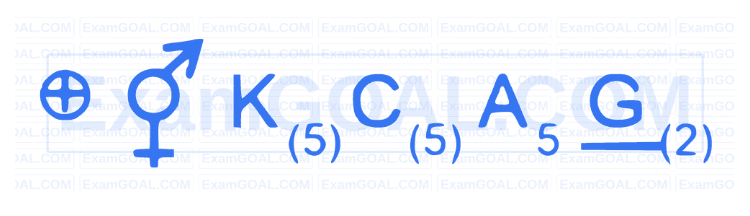
B. 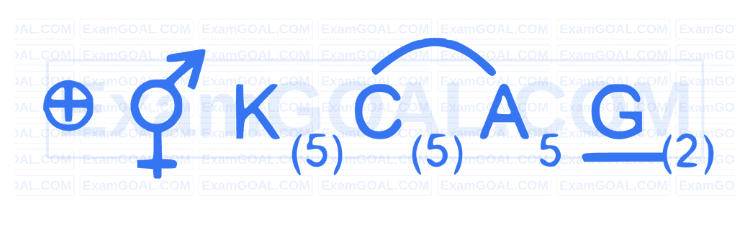
C. 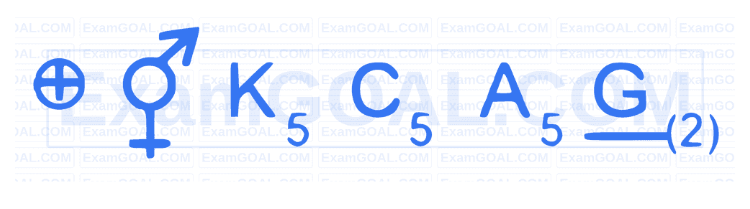
D. 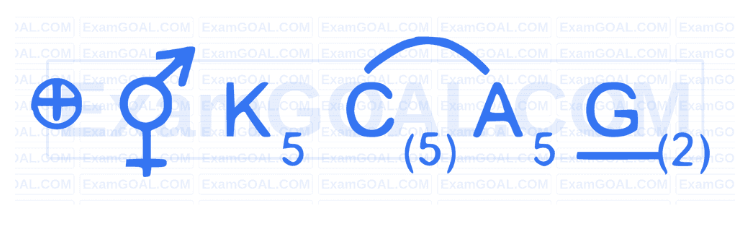
View answer and available explanation
Correct Option: B
Answer B follows the ExamSIDE indexed key. See the credited source; not independently verified against an official final key.
Q119Biology
Which of the following is an in situ conservation method?
A. Sacred Groves
B. Wildlife Safari Parks
C. Botanical Gardens
D. Seed Banks
View answer and available explanation
Correct Option: A
Answer A follows the ExamSIDE indexed key. See the credited source; not independently verified against an official final key.
Q120Biology
Which of the following statements are not true regarding restriction endonucleases?
A. They are called molecular scissors.
B. These are the enzymes responsible for restricting the growth of bacteriophages in E. coli.
C. They cut the DNA only at the centre of the palindromic sites.
D. They remove nucleotides only from the ends of DNA fragments.
E. They recognise specific palindromic base-pair sequences.
Choose the answer from the options given below :
A. A and B only
B. A and E only
C. D and E only
D. C and D only
View answer and available explanation
Correct Option: D
Answer D follows the ExamSIDE indexed key. See the credited source; not independently verified against an official final key.
Q121Biology

A. The main axis terminates in a flower
B. Flowers are solitary
C. The growth is limited
D. Flowers are borne in an acropetal succession
View answer and available explanation
Correct Option: D
Answer D follows the ExamSIDE indexed key. See the credited source; not independently verified against an official final key.
Q122Biology
Arrange the following in the correct developmental sequence related to microsporogenesis :
A. Microspore tetrads
B. Sporogenous tissue
C. Pollen grains
D. Pollen mother cells
Choose the correct answer from the options given below :
A. 
B. 
C. 
D. 
View answer and available explanation
Correct Option: B
Answer B follows the ExamSIDE indexed key. See the credited source; not independently verified against an official final key.
Q123Biology
Identify the correct statements about biomolecules.
A. Lipids are generally water soluble.
B. Proteins are polypeptides.
C. Polysaccharides are long chains of sugars.
D. Adenine and guanine are substituted pyrimidines.
E. Almost all enzymes are proteins.
Choose the correct answer from the options given below :
A. B, D and E only
B. B, C and E only
C. A, B and C only
D. C, D and E only
View answer and available explanation
Correct Option: B
Answer B follows the ExamSIDE indexed key. See the credited source; not independently verified against an official final key.
Q124Biology
Which of the following statements are true with reference to the sex-determination in honeybees?
A. An offspring formed from the union of a sperm and an egg, develops as a female (queen or worker).
B. An unfertilized egg develops as a male by parthenogenesis.
C. A male has half the number of chromosomes than that of a female.
D. Males produce sperms by meiosis.
E. Honeybees have a haplodiploid sex-determination system.
Choose the correct answer from the options given below :
A. A, B, C and E only
B. B, C, D and E only
C. A, B, C and D only
D. A, B, D and E only
View answer and available explanation
Correct Option: A
Answer A follows the ExamSIDE indexed key. See the credited source; not independently verified against an official final key.
Q125Biology
Heterophyllous development in response to environment is an example of which of the following phenomena?
A. Redifferentiation
B. Elasticity
C. Dedifferentiation
D. Plasticity
View answer and available explanation
Correct Option: D
Answer D follows the ExamSIDE indexed key. See the credited source; not independently verified against an official final key.
Q126Biology
Which of the following statements are correct regarding amino acids?
A. They are substituted methanes.
B. Serine is an aromatic amino acid.
C. Valine is a neutral amino acid.
D. Lysine is an acidic amino acid.
Choose the correct answer from the options given below:
A. C and D only
B. B and C only
C. A and C only
D. A and B only
View answer and available explanation
Correct Option: C
Answer C follows the ExamSIDE indexed key. See the credited source; not independently verified against an official final key.
Q127Biology
"The Evil Quartet" of biodiversity loss includes which of the following?
A. Over-exploitation; Alien species invasions; Air pollution; Co-extinctions
B. Habitat loss and fragmentation; Air pollution; Water pollution; Co-extinctions
C. Habitat loss and fragmentation; over-exploitation; Alien species invasions; Co-extinctions
D. Over-exploitation; Alien species invasions; Soil pollution; Co-extinctions
View answer and available explanation
Correct Option: C
Answer C follows the ExamSIDE indexed key. See the credited source; not independently verified against an official final key.
Q128Biology
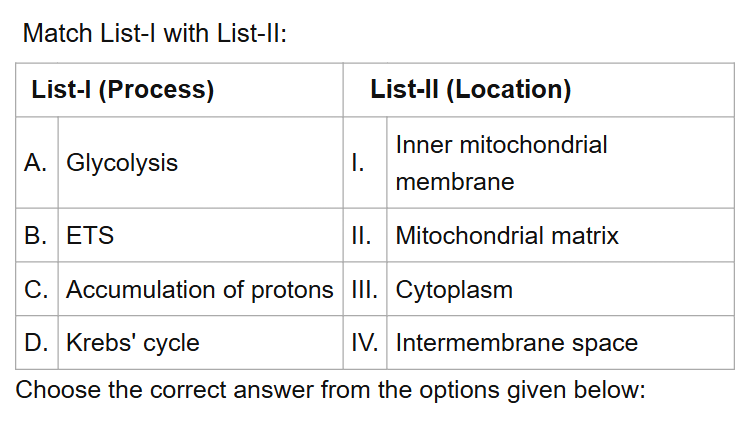
A. A-IV, B-II, C-I, D-III
B. A-II, B-III, C-IV, D-I
C. A-III, B-I, C-IV, D-II
D. A-I, B-IV, C-III, D-II
View answer and available explanation
Correct Option: C
Answer C follows the ExamSIDE indexed key. See the credited source; not independently verified against an official final key.
Q129Biology
Which one of the following is a triploid cell?
A. Synergid
B. Central cell
C. Zygote
D. Primary endosperm cell
View answer and available explanation
Correct Option: D
Answer D follows the ExamSIDE indexed key. See the credited source; not independently verified against an official final key.
Q130Biology
Which one of the following types of pollination brings genetically different types of pollen grains to the stigma?
A. Autogamy
B. Xenogamy
C. Geitonogamy
D. Cleistogamy
View answer and available explanation
Correct Option: B
Answer B follows the ExamSIDE indexed key. See the credited source; not independently verified against an official final key.
Q131Biology
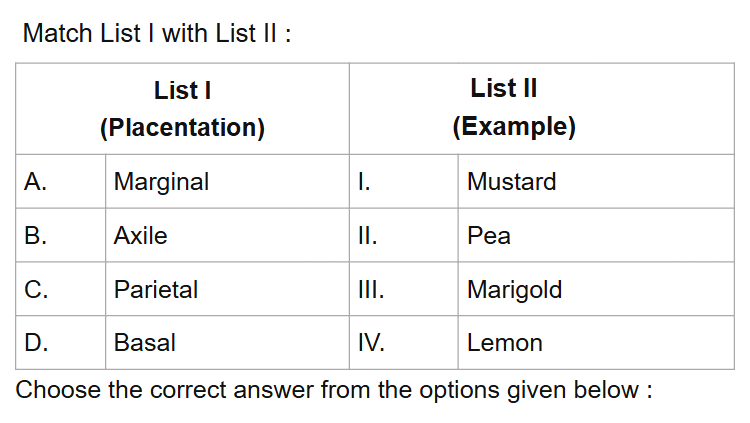
A. A-II, B-IV. C-I, D-III
B. A-I, B-III. C-II, D-IV
C. A-III, B-I. C-IV, D-II
D. A-IV, B-II. C-I, D-III
View answer and available explanation
Correct Option: A
Answer A follows the ExamSIDE indexed key. See the credited source; not independently verified against an official final key.
Q132Biology
The main criteria used for Five Kingdom Classification proposed By R.H. Whittaker (1969) included :
A. Cell structure
B. Body organization
C. Presence of flagellum
D. Reproduction
E. Phylogenetic relationships
Choose the correct answer from the options given below :
A. A, B, C, D and E
B. B, C and D only
C. A, B, D and E only
D. A, B and E only
View answer and available explanation
Correct Option: C
Answer C follows the ExamSIDE indexed key. See the credited source; not independently verified against an official final key.
Q133Biology
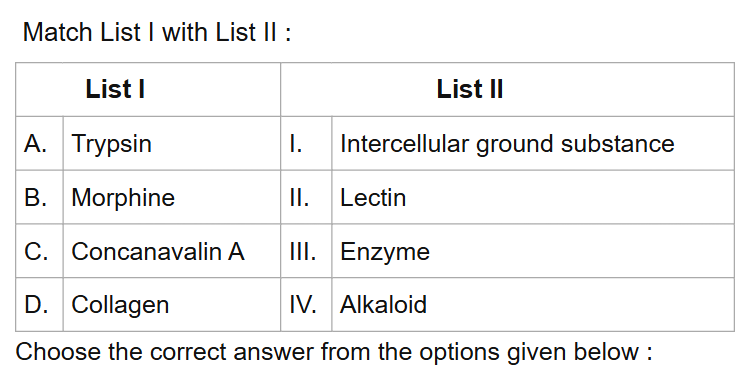
A. A-III, B-IV. C-II, D-I
B. A-I, B-II. C-III, D-IV
C. A-IV, B-III. C-II, D-I
D. A-III, B-II. C-IV, D-I
View answer and available explanation
Correct Option: A
Answer A follows the ExamSIDE indexed key. See the credited source; not independently verified against an official final key.
Q134Biology
Which of the following statements are correct with respect to DNA separation, isolation and visualization?
A. The cutting of DNA is done by molecular scissors.
B. The DNA fragments separate according to their size in an agarose gel, upon electrophoresis.
C. The separated DNA fragments can be seen without staining when exposed to UV light.
D. The separated DNA fragments, when stained with ethidium bromide, can be seen in visible light.
Choose the correct answer from the options given below :
A. B and D only
B. A and B only
C. B and C only
D. A and D only
View answer and available explanation
Correct Option: B
Answer B follows the ExamSIDE indexed key. See the credited source; not independently verified against an official final key.
Q135Biology
Which one of the following disorders is caused by the substitution of Glutamic acid (Glu) by Valine (Val) at the sixth position of the beta globin chain of the haemoglobin molecule?
A. Thalassemia
B. Sickle-cell anaemia
C. Phenylketonuria
D. Haemophilia
View answer and available explanation
Correct Option: B
Answer B follows the ExamSIDE indexed key. See the credited source; not independently verified against an official final key.
Q136Biology
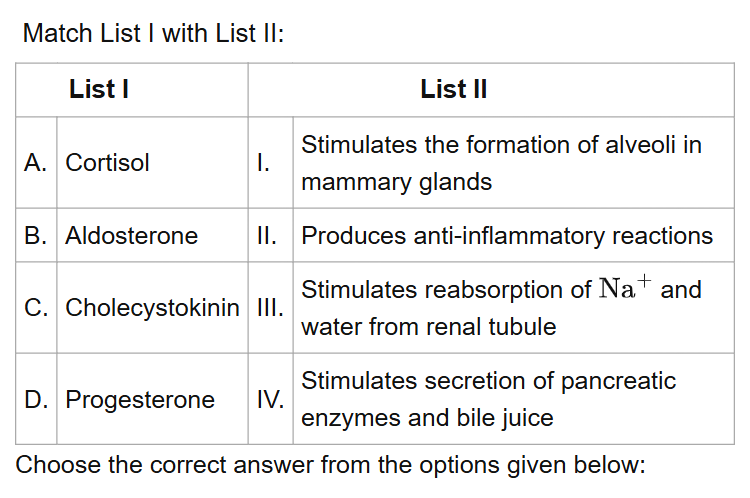
A. A-III, B-II, C-IV, D-I
B. A-IV, B-II, C-I, D-III
C. A-II, B-III, C-IV, D-I
D. A-II, B-III, C-I, D-IV
View answer and available explanation
Correct Option: C
Answer C follows the ExamSIDE indexed key. See the credited source; not independently verified against an official final key.
Q137Biology
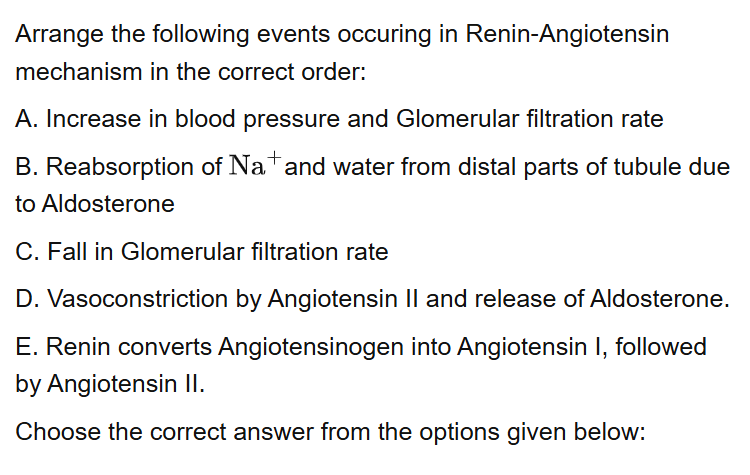
A. 
B. 
C. 
D. 
View answer and available explanation
Correct Option: D
Answer D follows the ExamSIDE indexed key. See the credited source; not independently verified against an official final key.
Q138Biology
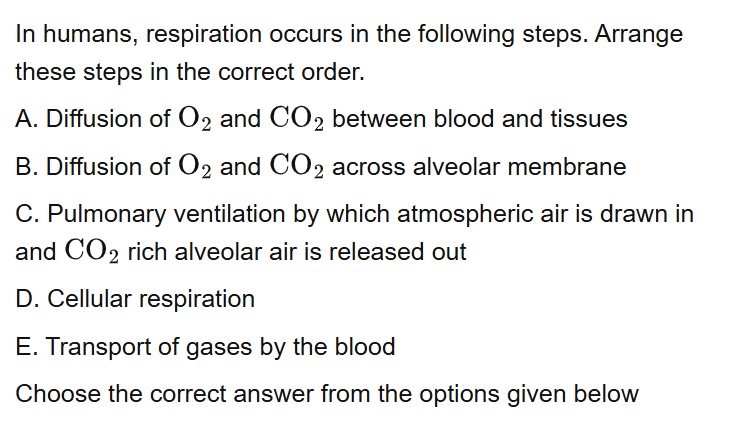
A. 
B. 
C. 
D. 
View answer and available explanation
Correct Option: C
Answer C follows the ExamSIDE indexed key. See the credited source; not independently verified against an official final key.
Q139Biology
The following are the stages of life cycle of Plasmodium. Arrange the stages in the proper order.
A. The parasites reproduce asexually in RBCs, bursting the cells.
B. The parasites reproduce asexually in liver cells, bursting the cells and releasing into blood.
C. Gametocytes develop in RBCs.
D. Sporozoites reach the liver through the blood.
E. Female mosquito injects sporozoites into humans during bite.
Choose the correct answer from the options given below:
A. 
B. 
C. 
D. 
View answer and available explanation
Correct Option: A
Answer A follows the ExamSIDE indexed key. See the credited source; not independently verified against an official final key.
Q140Biology
Insertion of a foreign DNA at BamHI site in an E.coli cloning vector pBR322 results in the loss of antibiotic resistance towards:
A. Ampicillin and tetracycline
B. Ampicillin
C. Tetracycline
D. Gentamycin
View answer and available explanation
Correct Option: C
Answer C follows the ExamSIDE indexed key. See the credited source; not independently verified against an official final key.
Q141Biology
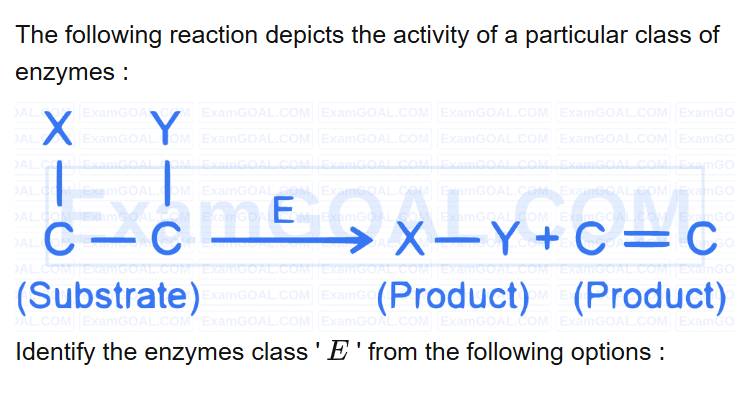
A. Transferases
B. Isomerases
C. Lyases
D. Ligases
View answer and available explanation
Correct Option: C
Answer C follows the ExamSIDE indexed key. See the credited source; not independently verified against an official final key.
Q142Biology

A. Schwann cell
B. Pre-synaptic membrane
C. Myelin sheath
D. Post-synaptic membrane
View answer and available explanation
Correct Option: D
Answer D follows the ExamSIDE indexed key. See the credited source; not independently verified against an official final key.
Q143Biology
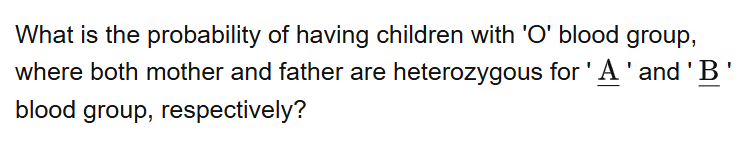
A. 
B. 
C. 
D. 
View answer and available explanation
Correct Option: A
Answer A follows the ExamSIDE indexed key. See the credited source; not independently verified against an official final key.
Q144Biology
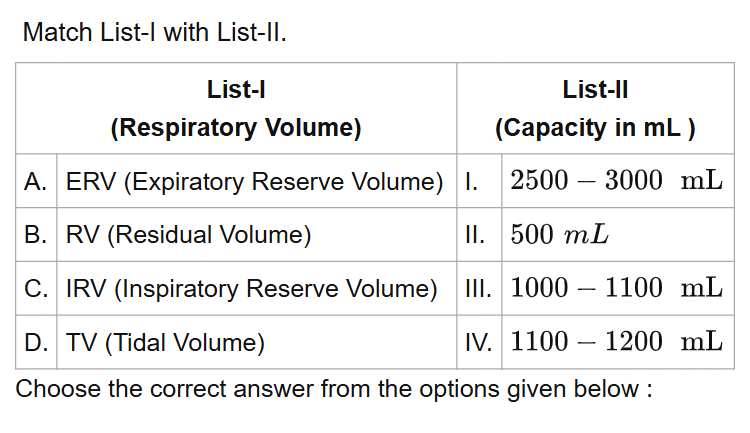
A. A-III, B-IV, C-I, D-II
B. A-III, B-I, C-IV, D-II
C. A-I, B-III, C-II, D-IV
D. A-I, B-II, C-III, D-IV
View answer and available explanation
Correct Option: A
Answer A follows the ExamSIDE indexed key. See the credited source; not independently verified against an official final key.
Q145Biology
Which of the following is not an example of convergent evolution?
A. Flippers of penguins and dolphins
B. Eyes of octopuses and mammals
C. Fore limbs of whales and bats
D. Wings of butterflies and birds
View answer and available explanation
Correct Option: C
Answer C follows the ExamSIDE indexed key. See the credited source; not independently verified against an official final key.
Q146Biology
Male frogs can be distinguished from female frogs due to the presence of
A. Bulging eyes
B. Vocal sacs
C. Webbed digits in feet
D. Copulatory pad on first digit of fore limbs
E. Olive green-coloured skin with dark irregular spots
Choose the correct answer from the options given below
A. B and C only
B. 
C. A and B only
D. B and D only
View answer and available explanation
Correct Option: D
Answer D follows the ExamSIDE indexed key. See the credited source; not independently verified against an official final key.
Q147Biology
A group of researchers procured some fish like animals and upon investigation the following characters were observed:
A. Endoskeleton was made of cartilage.
B. Ectoparasitic; as they were found attached on fish skin with their circular sucking mouth.
C. Paired fins and scales were absent, but 7 pairs of gill slits were present.
Which of the following species of animals did they consider to fit best with these characters?
A. 
B. 
C. 
D. Branchiostoma sp.
View answer and available explanation
Correct Option: B
Answer B follows the ExamSIDE indexed key. See the credited source; not independently verified against an official final key.
Q148Biology
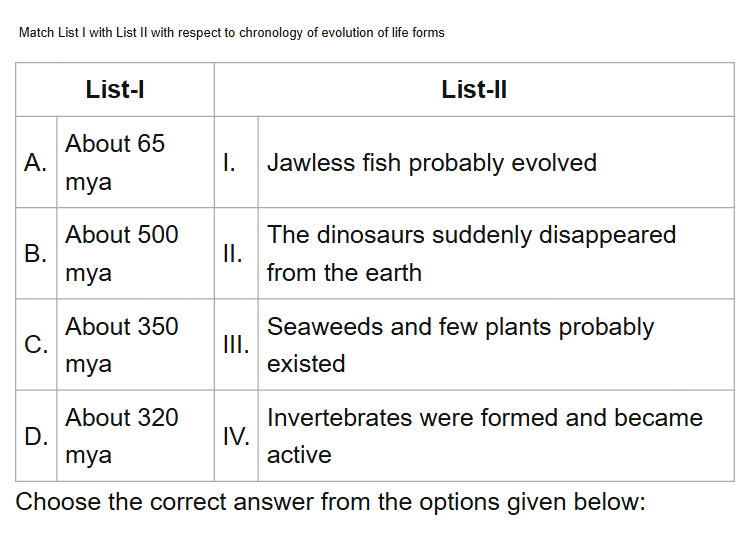
A. 
B. 
C. 
D. 
View answer and available explanation
Correct Option: D
Answer D follows the ExamSIDE indexed key. See the credited source; not independently verified against an official final key.
Q149Biology
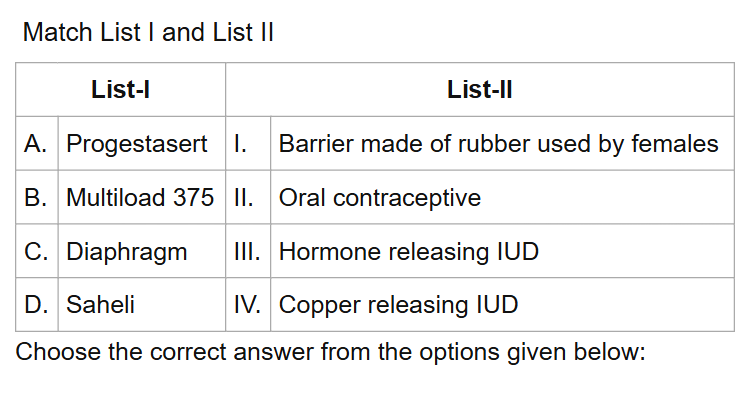
A. 
B. 
C. 
D. 
View answer and available explanation
Correct Option: A
Answer A follows the ExamSIDE indexed key. See the credited source; not independently verified against an official final key.
Q150Biology
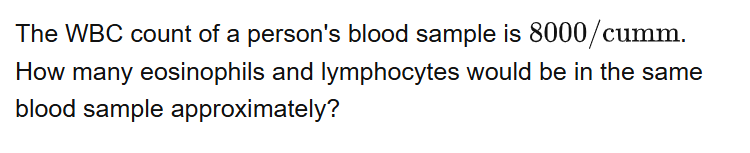
A. 
B. 
C. 
D. 
View answer and available explanation
Correct Option: B
Answer B follows the ExamSIDE indexed key. See the credited source; not independently verified against an official final key.
Q151Biology
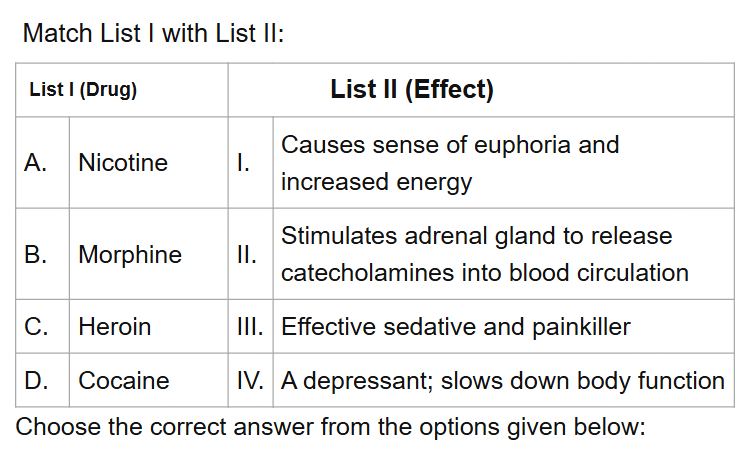
A. A-III, B-II, C-IV, D-I
B. A-II, B-III, C-I, D-IV
C. A-II, B-III, C-IV, D-I
D. A-III, B-II, C-I, D-IV
View answer and available explanation
Correct Option: C
Answer C follows the ExamSIDE indexed key. See the credited source; not independently verified against an official final key.
Q152Biology

A. Emphysema
B. Alzheimer's disease
C. Rheumatoid arthritis
D. Cystic fibrosis
View answer and available explanation
Correct Option: A
Answer A follows the ExamSIDE indexed key. See the credited source; not independently verified against an official final key.
Q153Biology
Select the set of fishes which belong to the class Osteichthyes:
A. Devil fish, Cuttlefish and Hagfish
B. Saw fish, Fighting fish and Dog fish
C. Starfish, Hagfish and Cuttlefish
D. Flying fish, Angel fish and Fighting fish
View answer and available explanation
Correct Option: D
Answer D follows the ExamSIDE indexed key. See the credited source; not independently verified against an official final key.
Q154Biology
Select the incorrect statements from the following:
A. Digestive system in Platyhelminthes is incomplete.
B. Bilateral symmetry is a characteristic feature of adult Echinoderms.
C. Pseudocoelom is possessed by Aschelminthes.
D. Notochord is persistent throughout life in the class Chondrichthyes.
E. Members of class Reptilia maintain a constant body temperature.
Choose the answer from the options given below:
A. A and C only
B. B and E only
C. C and D only
D. B and D only
View answer and available explanation
Correct Option: B
Answer B follows the ExamSIDE indexed key. See the credited source; not independently verified against an official final key.
Q155Biology

A. Ribosomes
B. Lysosomes
C. Centrosomes
D. Mitochondria
View answer and available explanation
Correct Option: A
Answer A follows the ExamSIDE indexed key. See the credited source; not independently verified against an official final key.
Q156Biology
Which of the following equations depicts Verhulst-Pearl logistic population growth?
A. 
B. 
C. 
D. 
View answer and available explanation
Correct Option: B
Answer B follows the ExamSIDE indexed key. See the credited source; not independently verified against an official final key.
Q157Biology
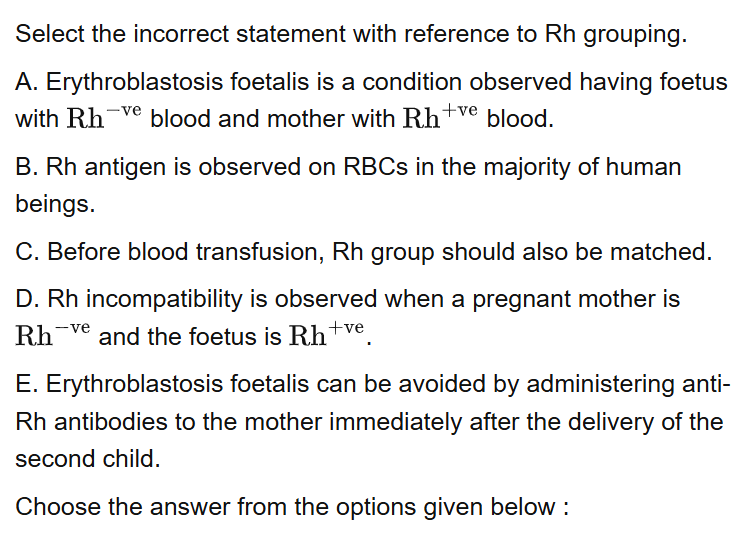
A. C and D only
B. A and B only
C. A and E only
D. B and C only
View answer and available explanation
Correct Option: C
Answer C follows the ExamSIDE indexed key. See the credited source; not independently verified against an official final key.
Q158Biology
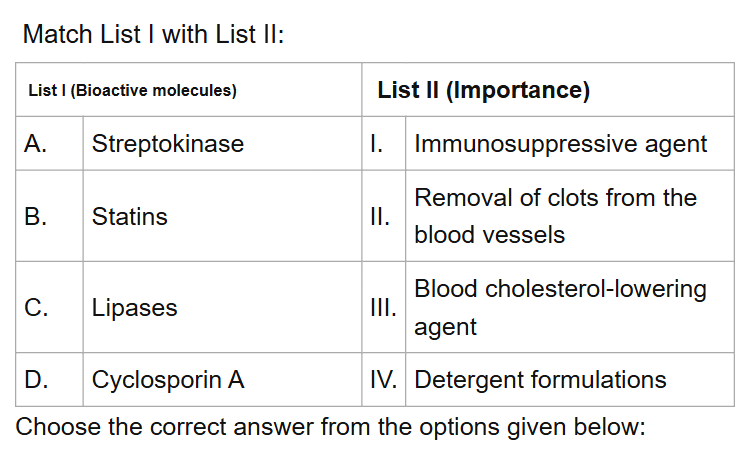
A. A-II, B-III, C-I, D-IV
B. A-IV, B-III, C-II, D-I
C. A-III, B-II, C-IV, D-I
D. A-II, B-III, C-IV, D-I
View answer and available explanation
Correct Option: D
Answer D follows the ExamSIDE indexed key. See the credited source; not independently verified against an official final key.
Q159Biology
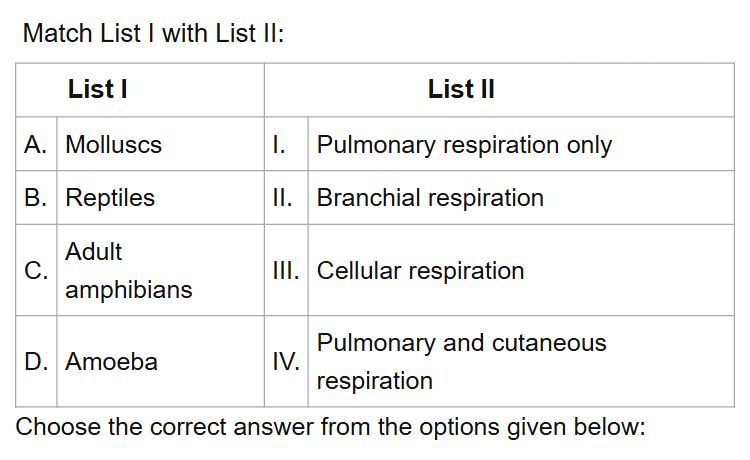
A. A-II, B-I, C-IV, D-III
B. A-I, B-II, C-IV, D-III
C. A-II, B-I, C-III, D-IV
D. A-III, B-II, C-I, D-IV
View answer and available explanation
Correct Option: A
Answer A follows the ExamSIDE indexed key. See the credited source; not independently verified against an official final key.
Q160Biology
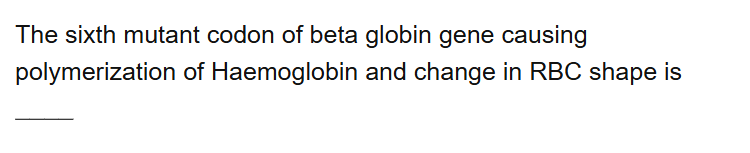
A. GUG
B. AUG
C. GAG
D. CAG
View answer and available explanation
Correct Option: A
Answer A follows the ExamSIDE indexed key. See the credited source; not independently verified against an official final key.
Q161Biology
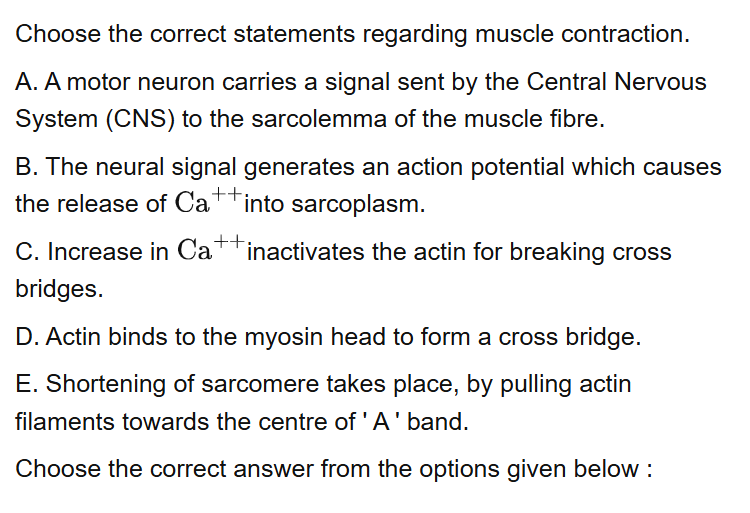
A. C and D only
B. A and B only
C. C and E only
D. A, B, D and E only
View answer and available explanation
Correct Option: D
Answer D follows the ExamSIDE indexed key. See the credited source; not independently verified against an official final key.
Q162Biology
Which of the following statements are correct with reference to human endoskeleton?
A. Human skull is monocondylic.
B. The joint between any two adjoining vertebrae is a cartilaginous joint.
C. In human beings, the number of cervical vertebrae is seven.
D. All ribs except the last 2 pairs are bicephalic.
E. The occipital bone of skull is articulated with atlas vertebra.
Choose the correct answer from the options given below:
A. B and E only
B. B, C and E only
C. C, D and E only
D. A, B and D only
View answer and available explanation
Correct Option: B
Answer B follows the ExamSIDE indexed key. See the credited source; not independently verified against an official final key.
Q163Biology
Spermatogonia undergo a series of cell divisions statements to produce sperms. Select the correct from the following :
A. Spermatogonia always undergo meiotic cell division.
B. Primary spermatocytes divide mitotically to produce secondary spermatocytes.
C. Secondary spermatocytes, through their second meiotic division, produce haploid spermatids.
D. Spermatids produce spermatozoa through mitosis.
E. Spermatids transform into spermatozoa by spermiogenesis.
Choose the correct answer from the options given below:
A. A and E only
B. C and E only
C. A, C and E only
D. B, C and D only
View answer and available explanation
Correct Option: B
Answer B follows the ExamSIDE indexed key. See the credited source; not independently verified against an official final key.
Q164Biology
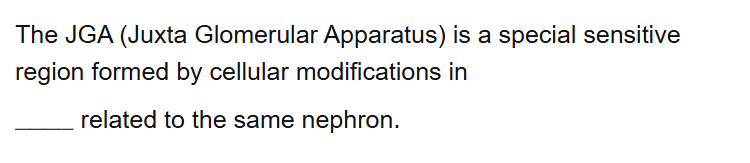
A. Distal convoluted tubule and efferent renal arteriole
B. Proximal convoluted tubule and efferent renal arteriole
C. Proximal convoluted tubule and afferent renal arteriole
D. Distal convoluted tubule and afferent renal arteriole
View answer and available explanation
Correct Option: D
Answer D follows the ExamSIDE indexed key. See the credited source; not independently verified against an official final key.
Q165Biology
Which one of the following is an appropriate example of sexual deceit?
A. Female wasp and fig
B. Ophrys and bumblebee
C. Sea anemone and clown fish
D. Cuckoo and crow
View answer and available explanation
Correct Option: B
Answer B follows the ExamSIDE indexed key. See the credited source; not independently verified against an official final key.
Q166Biology
Choose the correct statements regarding frog's anatomy:
A. Hepatic portal system is the special venous connection between liver and intestine.
B. There are twelve pairs of cranial nerves arising from the brain.
C. The ureters and oviducts open separately into the cloaca in female frogs.
D. Hind-brain consists of cerebellum, medulla oblongata and optic lobes.
E. Sinus venosus joins the right atrium of heart.
Choose the correct answer from the options given below:
A. A, B and C only
B. B and D only
C. B and C only
D. A, C and E only
View answer and available explanation
Correct Option: D
Answer D follows the ExamSIDE indexed key. See the credited source; not independently verified against an official final key.
Q167Biology
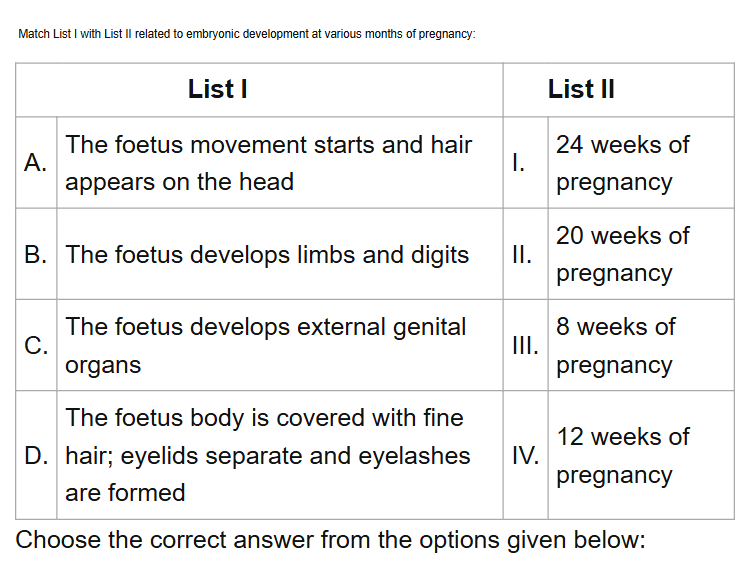
A. A-IV, B-II, C-III, D-I
B. A-II, B-III, C-IV, D-I
C. A-III, B-II, C-IV, D-I
D. A-II, B-IV, C-III, D-I
View answer and available explanation
Correct Option: B
Answer B follows the ExamSIDE indexed key. See the credited source; not independently verified against an official final key.
Q168Biology
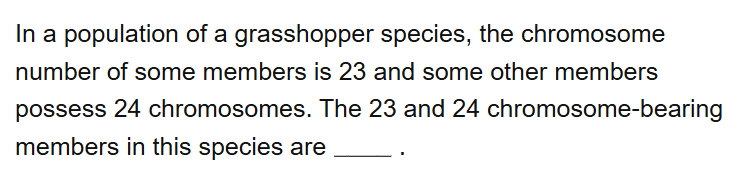
A. females and males, respectively
B. all males
C. males and females, respectively
D. all females
View answer and available explanation
Correct Option: C
Answer C follows the ExamSIDE indexed key. See the credited source; not independently verified against an official final key.
Q169Biology
In which animal do haploid cells divide mitotically to produce gametes?
A. Male honeybees
B. Male earthworms
C. Male frogs
D. Male grasshoppers
View answer and available explanation
Correct Option: A
Answer A follows the ExamSIDE indexed key. See the credited source; not independently verified against an official final key.
Q170Biology
Arrange the following cell layers/structures around the female gamete, from outer to inner side :
A. Zona pellucida
B. Perivitelline space
C. Corona radiata
D. Plasma membrane of ovum
Choose the correct answer from the options given below :
A. 
B. 
C. 
D. 
View answer and available explanation
Correct Option: C
Answer C follows the ExamSIDE indexed key. See the credited source; not independently verified against an official final key.
Q171Biology
What is the reason behind production of large holes in 'Swiss Cheese'?
A. 
B. 
C. 
D. 
View answer and available explanation
Correct Option: A
Answer A follows the ExamSIDE indexed key. See the credited source; not independently verified against an official final key.
Q172Biology
The toxin proteins isolated from Bacillus thuringiensis, coded by which of the following genes would contrl cotton bollworms and corn borer, respectively?
A. cryIAc and cryIAb
B. crylAc and cryllAb
C. cryllAb and crylAc
D. cryIAc and cryIIIAb
View answer and available explanation
Correct Option: A
Answer A follows the ExamSIDE indexed key. See the credited source; not independently verified against an official final key.
Q173Biology
Ecological pyramids represent the relationship between the organisms at different trophic levels and they are generally inverted for:
A. Pyramid of number in grassland
B. Pyramid of energy in pond ecosystem
C. Pyramid of biomass in grassland
D. Pyramid of biomass in sea
View answer and available explanation
Correct Option: D
Answer D follows the ExamSIDE indexed key. See the credited source; not independently verified against an official final key.
Q174Biology
Choose the correct statement regarding GIFT to overcome infertility.
A. Ova collected from a female donor are transferred to the uterus of an infertile female.
B. Early embryos with up to 8 blastomeres are transferred to the uterus of an infertile female.
C. Early embryos with up to 8 blastomeres are transferred into the fallopian tube of an infertile female.
D. It is the transfer of an ovum collected from a donor into the fallopian tube of another female who cannot
View answer and available explanation
Correct Option: D
Answer D follows the ExamSIDE indexed key. See the credited source; not independently verified against an official final key.
Q175Biology
Choose the correct statements regarding cell organelles and their inclusions.
A. The endomembrane system includes Golgi complex, endoplasmic reticulum and mitochondria.
B. Rough endoplasmic reticulum bears ribosomes on its surface.
C. Both mitochondria and plastids have circular DNA.
D. A network of microtubules, microfilaments and intermediate filaments present in the cytoplasm is called cytoskeleton.
E. Mitochondrion is a single membrane-bound structure.
Choose the correct answer from the options given below :
A. A and B only
B. A, B and C only
C. C, D and E only
D. B, C and D only
View answer and available explanation
Correct Option: D
Answer D follows the ExamSIDE indexed key. See the credited source; not independently verified against an official final key.
Q176Biology
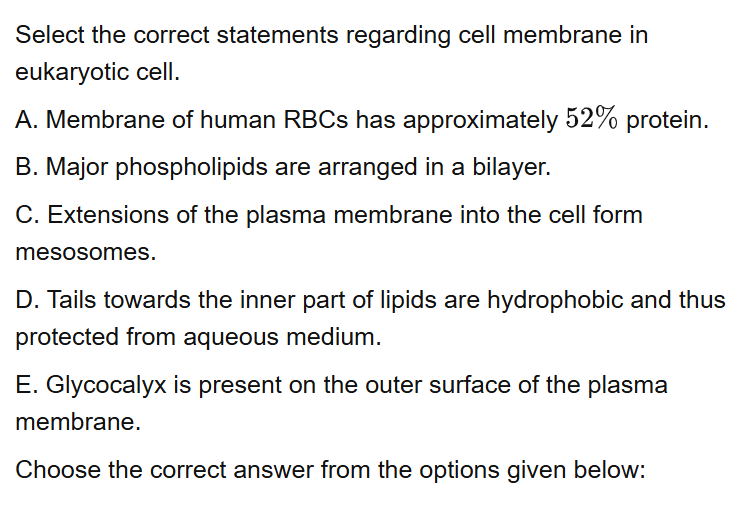
A. C, D and E only
B. B, C and E only
C. A, B and D only
D. A, C and E only
View answer and available explanation
Correct Option: C
Answer C follows the ExamSIDE indexed key. See the credited source; not independently verified against an official final key.
Q177Biology
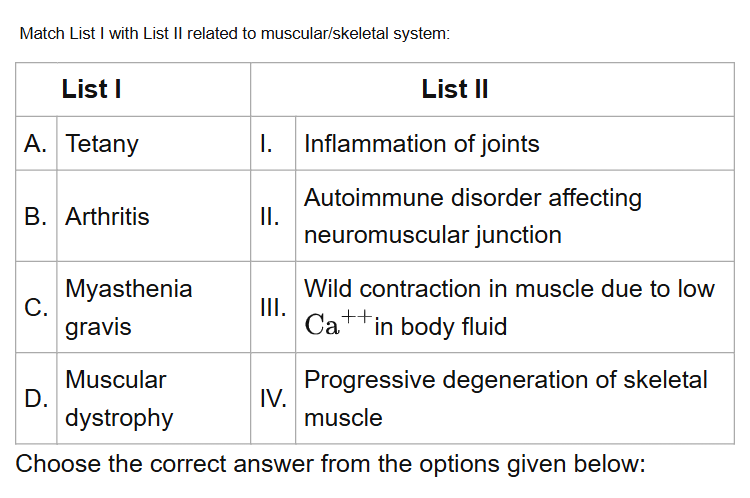
A. A-III, B-I, C-II, D-IV
B. A-I, B-II, C-III, D-IV
C. A-IV, B-III, C-II, D-I
D. A-III, B-II, C-I, D-IV
View answer and available explanation
Correct Option: A
Answer A follows the ExamSIDE indexed key. See the credited source; not independently verified against an official final key.
Q178Biology
Evolution of human appears parallel to the progressive development of brain and language skills. As such, the evolution of individual species in the sequence of their appearance is:
A. Ramapithecus → Homo habilis → Homo erectus → Neanderthal → Homo sapiens
B. Homo sapiens → Ramapithecus → Homo habilis → Neanderthal → Homo erectus
C. Homo habilis → Homo erectus → Ramapithecus → Neanderthal → Homo sapiens
D. Neanderthal → Ramapithecus → Homo habilis → Homo erectus → Homo sapiens
View answer and available explanation
Correct Option: A
Answer A follows the ExamSIDE indexed key. See the credited source; not independently verified against an official final key.
Q179Biology
The flightless bird with forelimbs modified as paddle-like structures suited for swimming is known as:
A. Struthio
B. Neophron
C. Aptenodytes
D. Psittacula
View answer and available explanation
Correct Option: C
Answer C follows the ExamSIDE indexed key. See the credited source; not independently verified against an official final key.
Q180Biology
Choose the correct statements regarding population interactions between two species.
A. In both parasitism and commensalism, only one species benefits and the other species is harmed.
B. Both species benefit in mutualism.
C. Both species benefit in commensalism.
D. In parasitism, only one species benefits and the other species is harmed.
E. In amensalism, one species is harmed and the other is unaffected.
Choose the correct answer from the options given below:
A. B and E only
B. A and B only
C. B, D and E only
D. A and D only
View answer and available explanation
Correct Option: C
Answer C follows the ExamSIDE indexed key. See the credited source; not independently verified against an official final key.