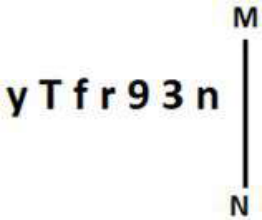
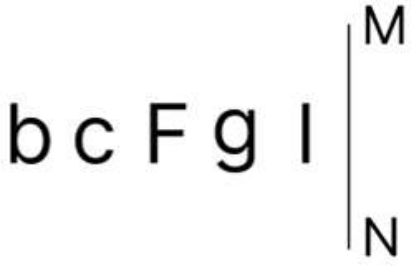
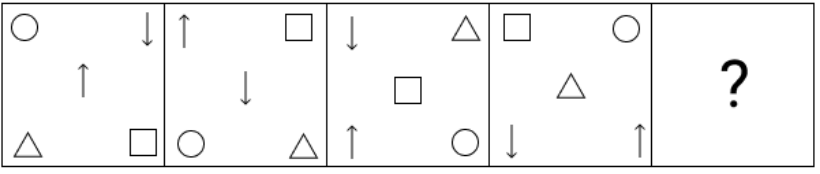
English SSC CGL Tier I papers. Free 60-minute mocks, 100 questions, 200 marks; +2 correct and −0.5 incorrect. Source: SSC response sheets preserved by SSC Portal. The marked archived keys have not been independently revalidated against final SSC keys; worked explanations are pending review. A/B/C/D correspond to source options 1/2/3/4.
These topics contain published free SSC questions. Counts reflect the selected language and paper filters. Archived papers show their source and key status above.
What will come in place of the question mark (?) in the following equation, if ‘+’ and ‘–’
are interchanged and ‘×’ and ‘÷’ are interchanged?
4515 × 5 – 431 ÷ 3 + 821 = ?
Answer and explanation
Correct answer: D
Answer from the marked archived SSC response-sheet key. Final SSC key not independently revalidated; worked explanation pending editorial review.
31 is related to 152 by certain logic. Following the same logic, 47 is related to 168. To
which of the following is 66 related, following the same logic? (NOTE : Operations
should be performed on the whole numbers, without breaking down the numbers into
its constituent digits. E.g. 13 – Operations on 13 such as adding /deleting /multiplying
etc., to 13 can be performed. Breaking down 13 into 1 and 3 and then performing
mathematical operations on 1 and 3 is not allowed.)
Answer and explanation
Correct answer: B
Answer from the marked archived SSC response-sheet key. Final SSC key not independently revalidated; worked explanation pending editorial review.
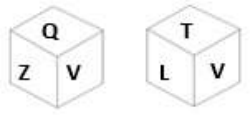
Six letters Q, Z, V, T, L and A are written on different faces of a dice. Two positions of
this dice are shown in the figures below. Find the letter on the face opposite to Q.
Answer and explanation
Correct answer: B
Answer from the marked archived SSC response-sheet key. Final SSC key not independently revalidated; worked explanation pending editorial review.
In the following number-pairs, the second number is obtained by applying certain
mathematical operations to the first number. In three of the four pairs, the same
pattern is applied and hence they form a group. Select the number-pair that DOES NOT
belong to this group.
(NOTE: Operations should be performed on the whole numbers, without breaking
down the numbers into their constituent digits. E.g. 13 – Operations on 13 such as
adding/subtracting/multiplying to 13 can be performed. Breaking down 13 into 1 and 3
and then performing mathematical operations on 1 and 3 is not allowed.)
Answer and explanation
Correct answer: B
Answer from the marked archived SSC response-sheet key. Final SSC key not independently revalidated; worked explanation pending editorial review.
The question contains pairs of words that are related to each other in a certain way.
Three of the following four word pairs are alike as these have the same relationship
and thus form a group. Which word pair is the one that DOES NOT belong to that
group?
(The words must be considered as meaningful English words and must not be related
to each other based on the number of letters/number of consonants/vowels in the
word.)
Answer and explanation
Correct answer: B
Answer from the marked archived SSC response-sheet key. Final SSC key not independently revalidated; worked explanation pending editorial review.
The position of how many letters will remain unchanged if each of the letters in the
word ‘NIGHTMARES’ is re-arranged in the English alphabetical order from left to right?
Answer and explanation
Correct answer: B
Answer from the marked archived SSC response-sheet key. Final SSC key not independently revalidated; worked explanation pending editorial review.
What will come in the place of ‘?’ in the following equation, if ‘+’ and ‘–‘ are
interchanged and ‘×’ and ‘÷’ are interchanged?
5 – 4 ÷ 9 + 80 × 10 = ?
Answer and explanation
Correct answer: B
Answer from the marked archived SSC response-sheet key. Final SSC key not independently revalidated; worked explanation pending editorial review.
Select the option in which the numbers share the same relationship as that shared by
the given pair of numbers.
(149, 213)
(168, 232)
(NOTE: Operations should be performed on the whole numbers, without breaking
down the numbers into its constituent digits. E.g. 13 – Operations on 13 such as
adding/deleting/multiplying etc. to 13 can be performed. Breaking down 13 into 1 and 3
and then performing mathematical operations on 1 and 3 is not allowed.)
Answer and explanation
Correct answer: B
Answer from the marked archived SSC response-sheet key. Final SSC key not independently revalidated; worked explanation pending editorial review.
Select the option that is related to the fifth letter-cluster in the same way as the second
letter-cluster is related to the first letter-cluster and the fourth letter-cluster is related
to the third letter-cluster.
MEK: NVP :: GYT: TBG :: JWH:?
Answer and explanation
Correct answer: A
Answer from the marked archived SSC response-sheet key. Final SSC key not independently revalidated; worked explanation pending editorial review.
Three statements are given followed by three conclusions numbered I, II and III.
Assuming the statements to be true, even if they seem to be at variance with
commonly known facts, decide which of the conclusions logically follow(s) from the
statements.
Statements:
No card is a parcel.
All cards are envelopes.
Some envelopes are bags.
Conclusions:
I. All envelopes can never be parcels.
II. No card is a bag.
III. At least some bags are postcards.
Answer and explanation
Correct answer: A
Answer from the marked archived SSC response-sheet key. Final SSC key not independently revalidated; worked explanation pending editorial review.
Select the option that represents the letters that when placed from left to right in the
blanks below will complete the letter series.
L_P_QS_K_P_S_KP_Q_L_ _PQS
Answer and explanation
Correct answer: D
Answer from the marked archived SSC response-sheet key. Final SSC key not independently revalidated; worked explanation pending editorial review.
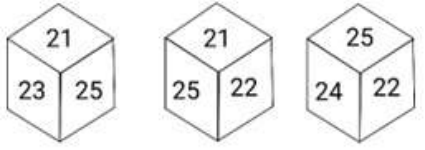
Six numbers 21, 22, 23, 24, 25 and 26 are written on different faces of a dice. Three
positions of this dice are shown in the figure. Find the number on the face opposite to
24.
Answer and explanation
Correct answer: D
Answer from the marked archived SSC response-sheet key. Final SSC key not independently revalidated; worked explanation pending editorial review.
In a certain code language, ‘what where how’ is written as ‘aa dd ff’; ‘where there that’
is written as ‘dd zz pp’ and ‘which what here’ is written as ‘ff kk ll’. How is ‘how’ written
in that language?
Answer and explanation
Correct answer: A
Answer from the marked archived SSC response-sheet key. Final SSC key not independently revalidated; worked explanation pending editorial review.